November 2, 2026 · Mochatrade · 5 min read
Why Did Brazil's Stock Market Plunge After Lula's Victory?
Brazil’s main stock index fell 13.88% in one day after Lula won the runoff, because investors had bet heavily on a Bolsonaro victory.

On October 26, Brazil's main stock index fell 13.88% in one session, a day after Luiz Inácio Lula da Silva won a fourth term. Trading stopped for 30 minutes, the first pause since March 2020, and more than $200 billion of market value (about ₹19 lakh crore) vanished at the open.
This post explains why a win can sink a market, moving from one idea about prices to the Brazilian facts to the numbers. Terms are defined as they appear.
What Does It Mean When News Is Priced In?
It means investors already acted on what they expect, so a price moves only by the gap between the forecast and the result.
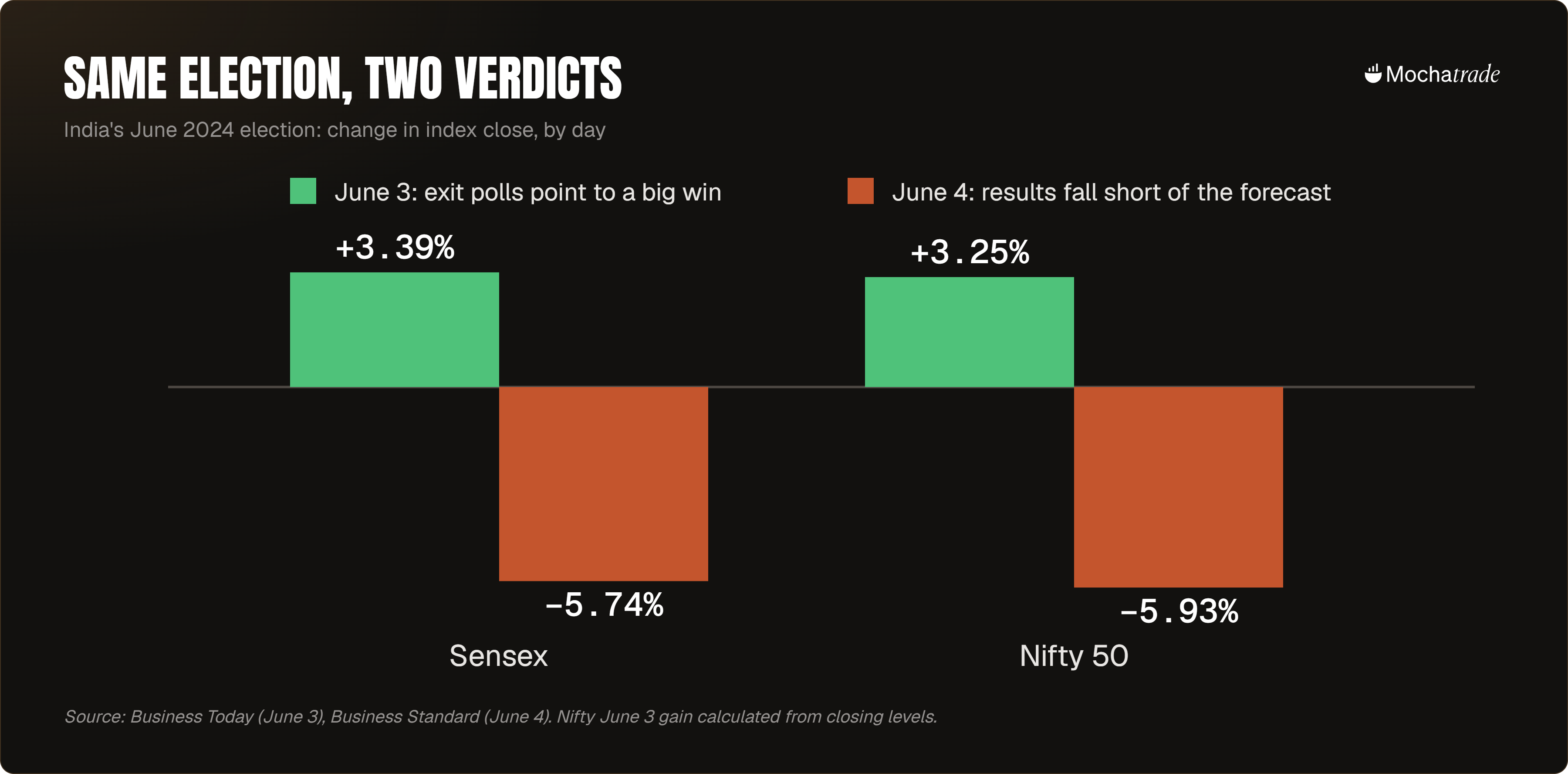
India showed this in 2024. Exit polls (surveys of voters as they leave the booth) pointed to a big win for the ruling alliance, and stocks rose. Then the real count came in lower:
June 3, after the exit polls: Sensex up 3.39% to 76,468, a record close.
June 4, result day: Sensex down 5.74% to 72,079, and the Nifty 50 down 5.93%.
The alliance still led, but by less than forecast. Brazil ran the same pattern at a much larger scale.
Source: Business Today, Business Standard.
What Happened In Brazil's Election?
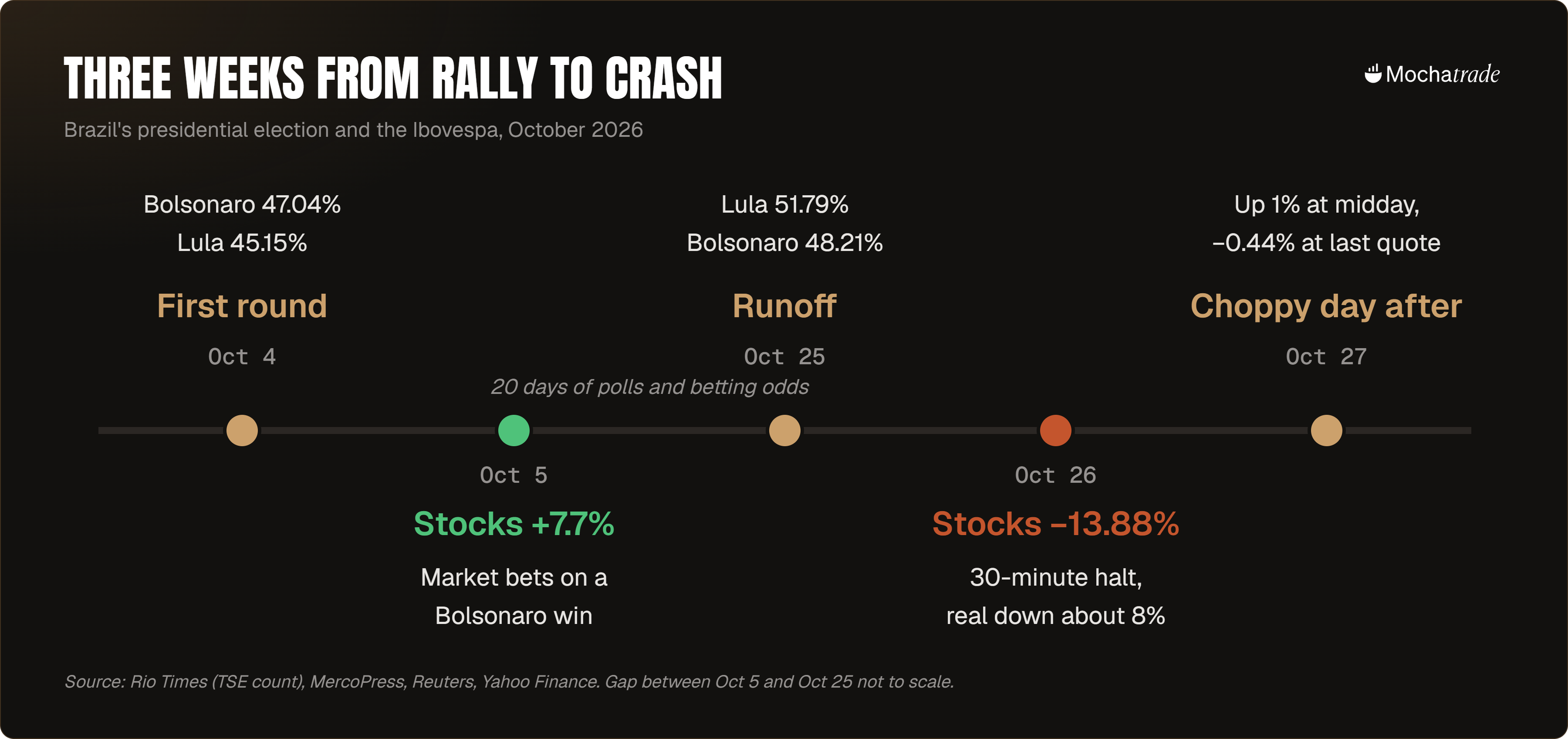
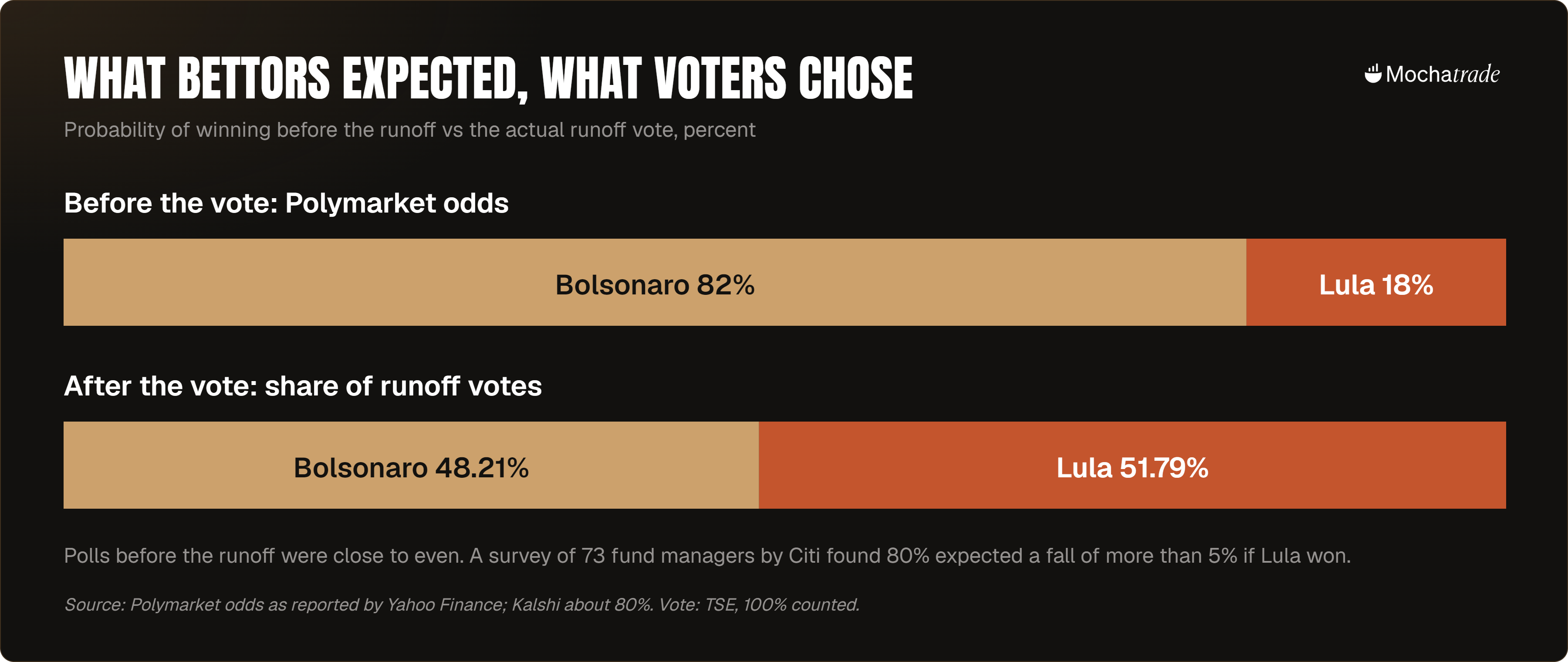
Lula beat Flávio Bolsonaro 51.79% to 48.21% in the October 25 runoff, a margin of about 4.4 million votes. A runoff is a secx₹ond vote between the top two candidates when nobody clears 50% in the first round. Investors had expected Bolsonaro to win. Here is how that expectation built up:
October 4, first round: Bolsonaro led with 47.04% of valid votes to Lula's 45.15%, and neither passed 50%.
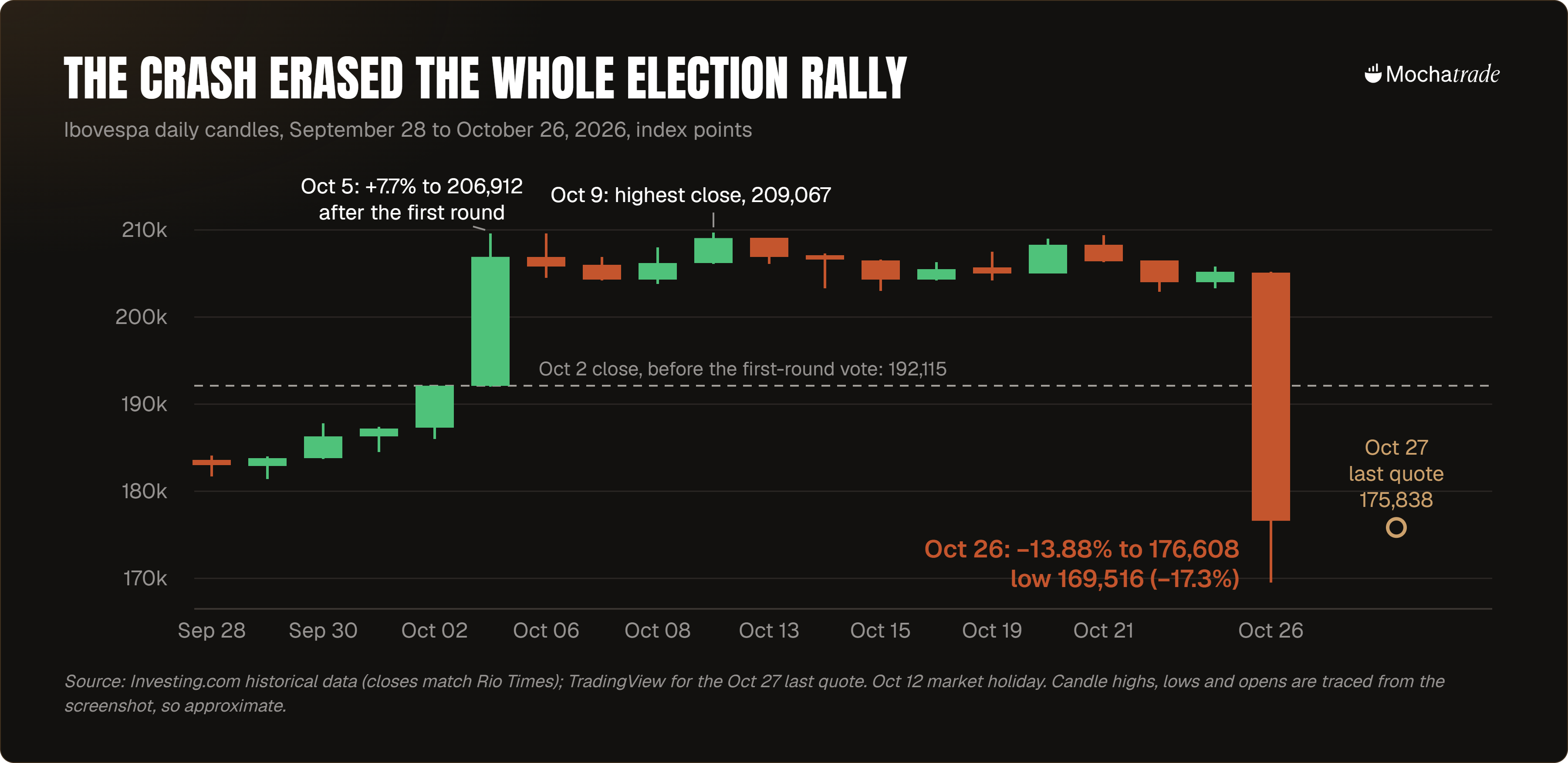
October 5: the Ibovespa, the benchmark index of Brazil's biggest listed companies (a role like the Nifty 50 in India), rose 7.7%.
By the Friday before the runoff, after bullish calls from big banks, stocks stood almost 7% above their pre-election level.
Before the runoff: Polymarket, a site where people bet on outcomes, gave Bolsonaro 82% odds and Kalshi about 80%, while polls were close to even.
Source: Rio Times, MercoPress, Reuters.
A Citi survey of 73 fund managers found 80% expected stocks to fall more than 5% if Lula won, so prices already reflected the bet. I find the gap between polls (close to even) and betting odds (about 80%) the most interesting detail: positioning ran ahead of the evidence.
Source: Polymarket via Yahoo Finance; Brazil's electoral court.
Why Did Investors Want A Bolsonaro Win?
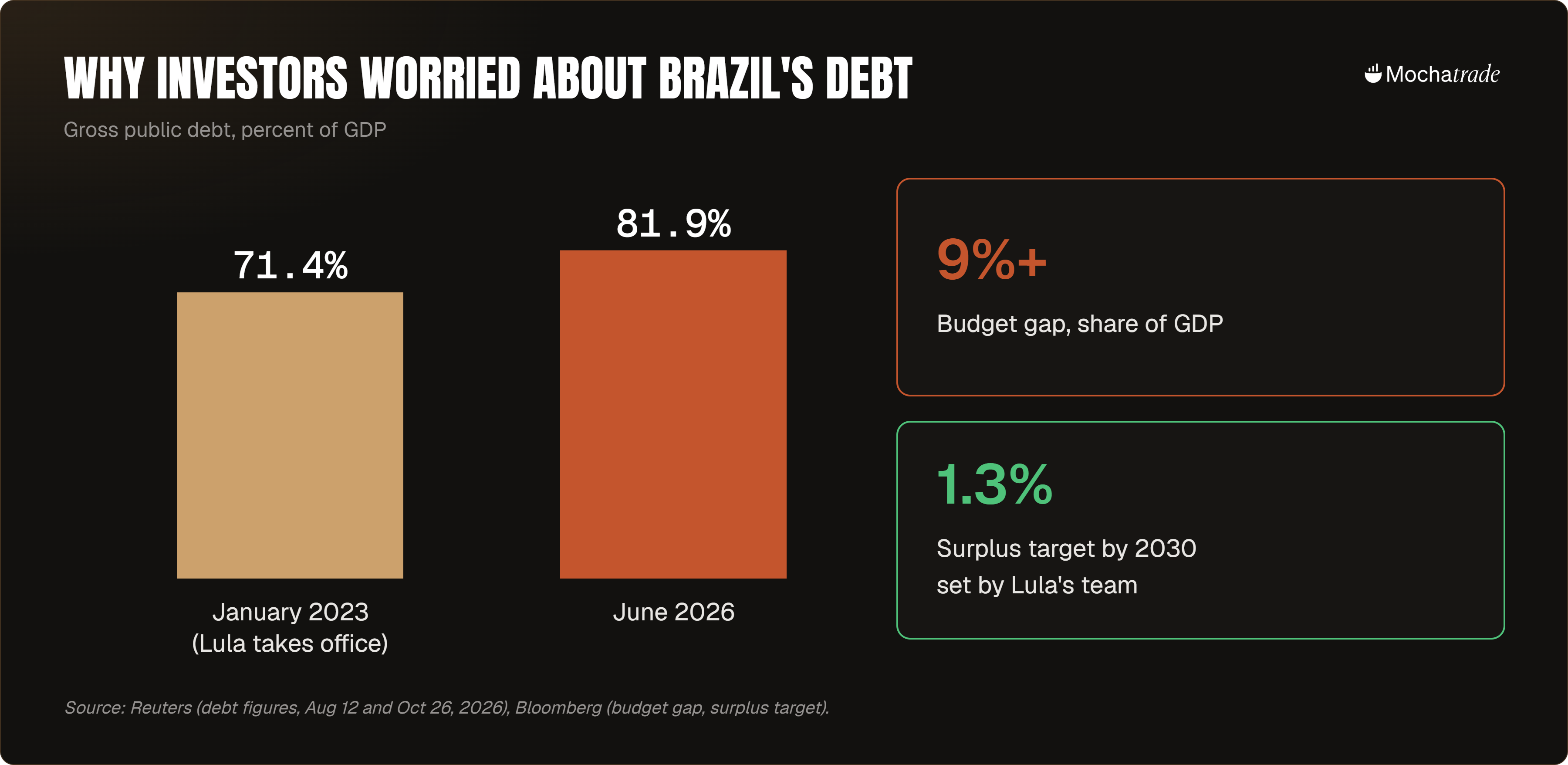
Because of Brazil's debt. Government debt stands at about 82% of the country's yearly economic output, known as GDP, up from 71.4% when Lula took office in January 2023. Put another way, Brazil owes roughly 82 reais for every 100 it produces in a year. Investors hoped a new government would rein in spending.
Source: Reuters, Bloomberg.
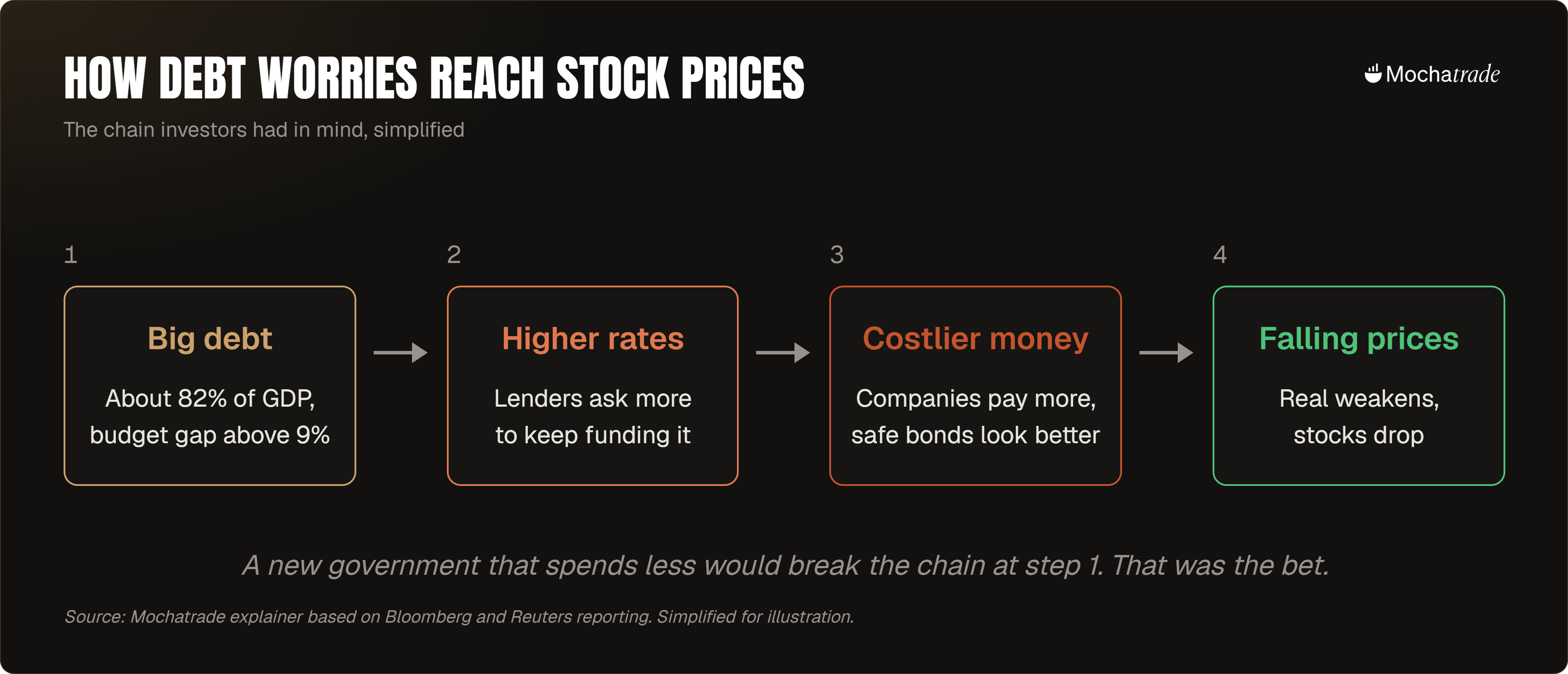
Here is why debt matters for stock prices:
The government runs a budget gap above 9% of GDP, so it borrows heavily.
Lenders ask for higher interest rates to keep funding it.
Higher rates raise costs for companies and make safe bonds look better than stocks.
Foreign investors sell reais, the currency weakens, and dollar-based returns fall further.
Lula's team targets a budget surplus of about 1.3% of GDP by 2030, but Bloomberg reported that investors doubted it and expected higher revenue rather than spending cuts.
How Big Was The Crash?
The Ibovespa closed down 13.88% at 176,608, its worst close since March 2020, and fell about 17% at its low. B3, Brazil's exchange, triggered a circuit breaker, an automatic pause, for 30 minutes after a 10% drop. The fall erased the whole rally since the first round.
Source: Investing.com, Rio Times, TradingView.
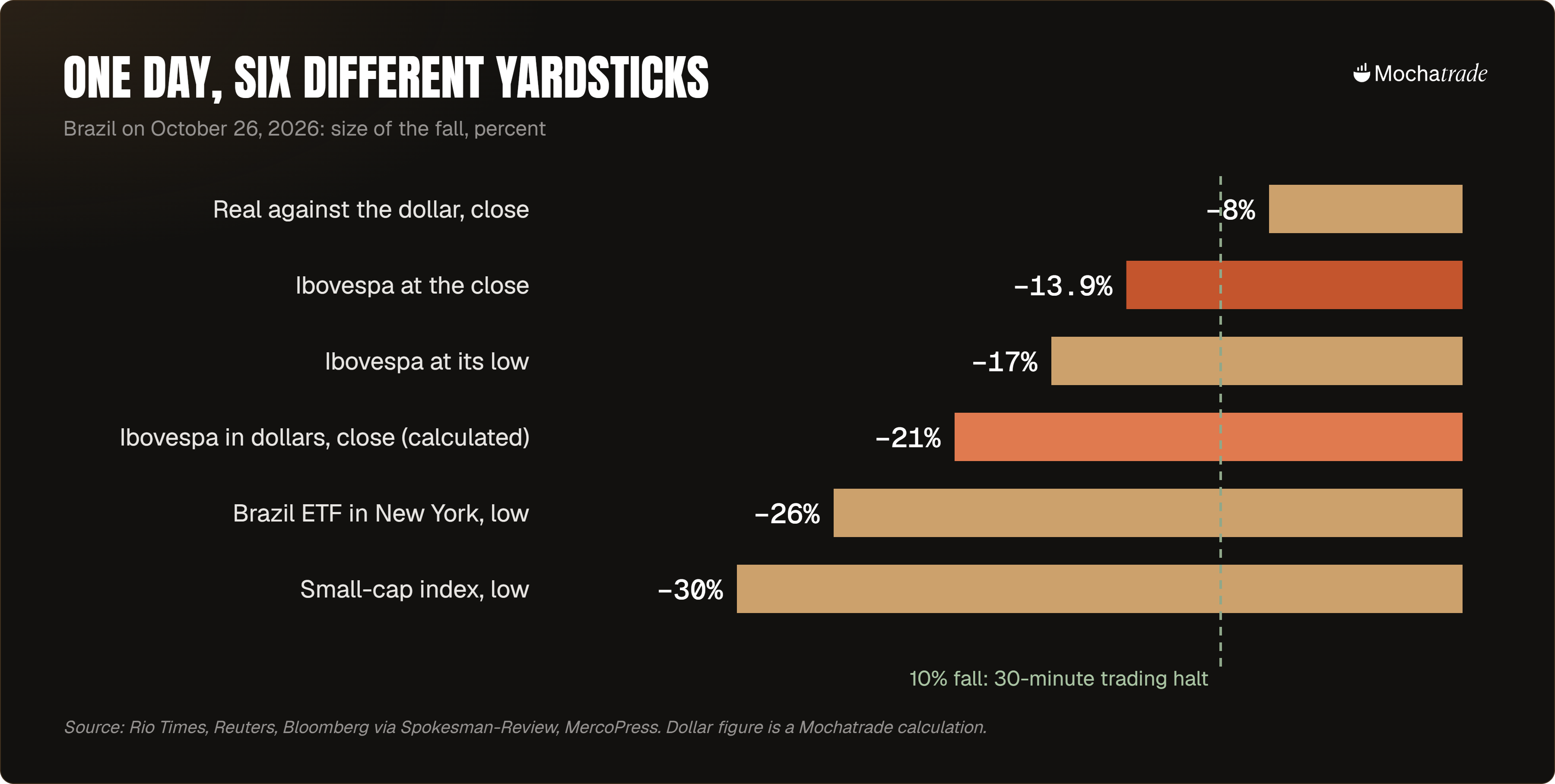
The same day looked different depending on the yardstick:
Real against the dollar: down about 8% at the close and nearly 12% at its worst, its steepest fall since 1999, according to El País.
Ibovespa in dollars: down about 21% at the close (my calculation: 13.9% on stocks compounded with about 8% on the currency).
A New York ETF that tracks Brazil (an exchange traded fund, a basket of shares that trades like one stock): down as much as 26%, its largest fall since its 2000 debut.
Small-cap index (smaller companies): down as much as 30%, the most on record.
That is why you see 14%, 17%, 26% and 30% for the same day: the close, the low, a dollar-priced fund and the smallest companies. More than half of the index's stocks fell by double digits.
Source: Rio Times, Reuters, Bloomberg, MercoPress. Dollar figure calculated.
Has The Market Recovered?
Not yet. On October 27 the Ibovespa was up about 1% at midday and the real gained nearly 2%, but the index later slipped to 175,838, down 0.44% on the day and about 14% below its October 23 close (my calculation, intraday figures).
Voices are split on what comes next:
Finance Minister Dario Durigan said "it was not a reaction to fundamentals" and pledged fiscal responsibility.
JPMorgan cut its Brazil currency and rates view to market weight from overweight, while Wells Fargo called the reaction "overdone."
I read the swings as a market still looking for a floor. Bolsonaro first asked courts to annul the result, and his Liberal Party has since said it respects it. The open question is fiscal: who runs the finance ministry next term, and whether the budget shows spending cuts.
What Can Investors Learn From Brazil?
Compare the forecast with the price before reacting to the headline. Four checks:
Ask what is priced in. A 7% rally before the vote showed the market had picked a winner.
Check whether positioning matches the evidence. Polls were close to even while betting odds sat near 80%.
Watch the currency and bond yields. They moved with the stocks and show the fiscal worry directly.
Expect overshoot when many hold the same view.
India in 2024 and Brazil in 2026 share one feature: the price had run ahead of the news. Brazil's next checkpoints are the finance minister appointment and the real near 5.30 per dollar, the level Wells Fargo targets under Lula.
Educational content only. Not investment advice.
MochaLearn is a free A to Z course on understanding and trading US stocks and commodities, built for Indian traders.