September 7, 2026 · Mochatrade · 9 min read
Mocha Markets Weekly
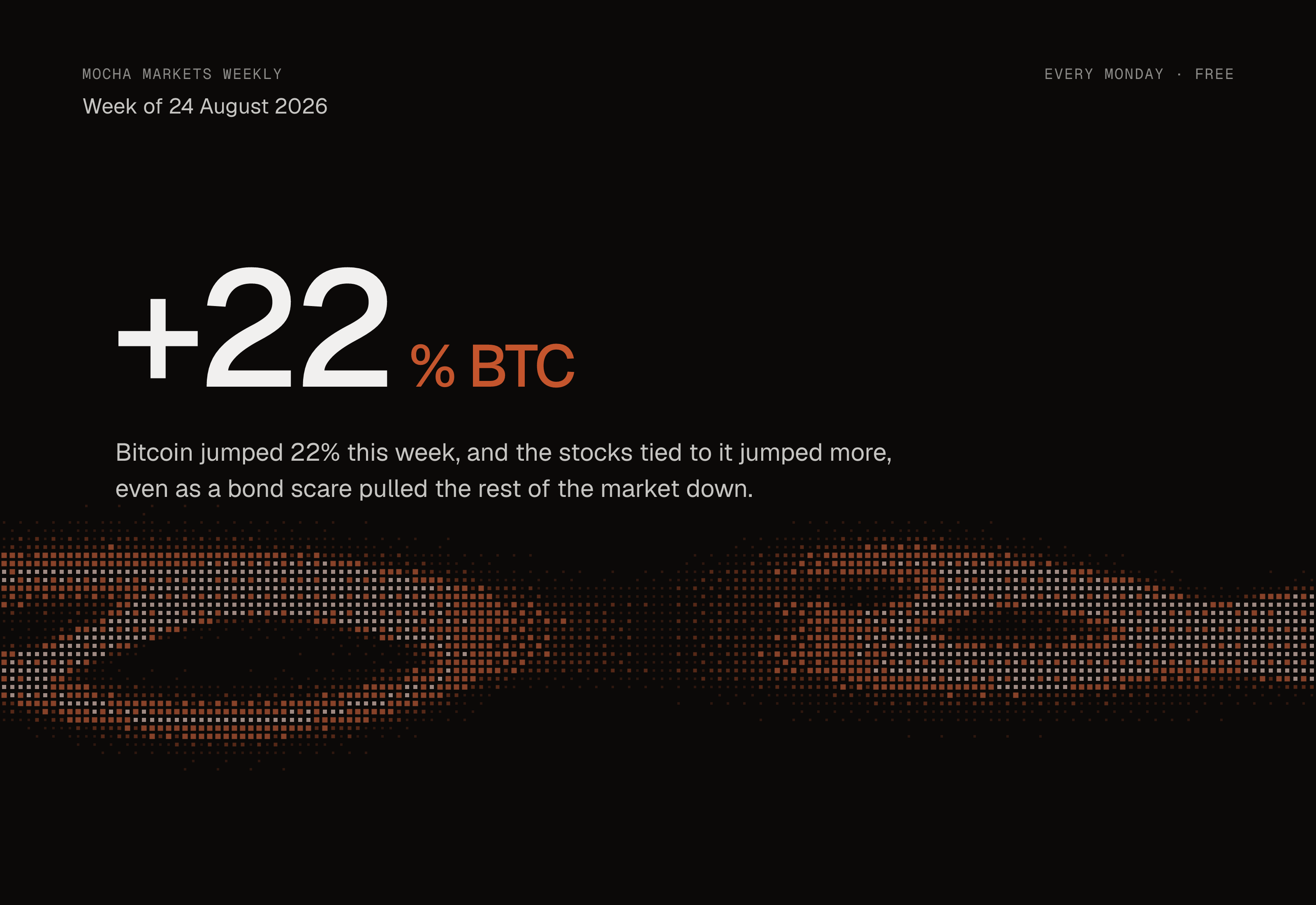
Oil rose 8% while the tankers came back, Apple moved on old news, and two central banks report before the Fed sits down.

The goal of Mocha Markets Weekly is to give you as much in-depth value as possible in the most unintimidating way possible, so you can use what you learn in your very next trade.
The US week behind. The top movers over the week, along with the reasoning and what was expected.
The US week ahead. What to watch for and what isn’t priced in yet: mergers, earnings, conferences, and more.
One concept. One thing nobody has bothered to explain to people who already know how to trade.
One chart. The most interesting thing we saw each week, with a deeper article you can go read if you want more.
01 The US week behind
On September 1 alone, twelve companies in the S&P 500 printed a 52-week low and seven printed a 52-week high. Nearly all of it runs off one input, the price of oil. Here is the chain in the order it moved.
ENERGY UP 1.3% ON THE DAY THE DOW LOST 400 POINTS.Energy was the best of the eleven S&P sectors on September 1, on a session where the index fell. Marathon Petroleum traded at $381.15, a price it has not touched since June 2011. Energy is up 21% this quarter and 43% this year, first place on both counts. These are the companies that sell the thing the war made expensive, so this is the simplest leg.
2.APPLE UP 2.6% ON A DAY EVERYONE HAD KNOWN ABOUT SINCE APRIL.
John Ternus took over as chief executive on September 1, replacing Tim Cook after fifteen years. Apple published that date on April 21. A company worth about $4.5 trillion, roughly what India produces in a year, still moved 2.6% on an event with a known outcome and four months of notice.
Apple up 2.6% on a day everyone had known about since April. John Ternus took over as chief executive on September 1, replacing Tim Cook after fifteen years. Apple published that date on April 21. A company worth about $4.5 trillion, roughly what India produces in a year, still moved 2.6% on an event with a known outcome and four months of notice
1. Energy up 1.3% on the day the Dow lost 400 points.
Energy was the best of the eleven S&P sectors on September 1, on a session where the index fell. Marathon Petroleum traded at $381.15, a price it has not touched since June 2011. Energy is up 21% this quarter and 43% this year, first place on both counts. These are the companies that sell the thing the war made expensive, so this is the simplest leg.
2. Apple up 2.6% on a day everyone had known about since April.
John Ternus took over as chief executive on September 1, replacing Tim Cook after fifteen years. Apple published that date on April 21. A company worth about $4.5 trillion, roughly what India produces in a year, still moved 2.6% on an event with a known outcome and four months of notice.
3. Nvidia paid twelve days of revenue.
Nvidia agreed to buy Hugging Face for $11.9 billion, plus up to $1 billion to keep the staff, around ₹1.23 lakh crore in all. One quarter of Nvidia’s sales is $96.2 billion, so the whole company cost it roughly twelve days of its own revenue. A buyer usually falls on a deal this size. Nvidia rose 5% on the week, a rounding error. It is the second largest deal Nvidia has ever signed, and it closes in the first half of 2027.
02 The US week ahead
The ongoing story: the most critical scheduled volatility event of the month is coming up and the market is actively pricing it. Also, US markets are shut Monday, September 7, for Labor Day. Shares, options and bonds all closed.
Friday, Sep 11, 6:00 PM IST. US inflation report.
Context. The Fed is America’s RBI. It meets on September 15 and 16 to set rates, and the rate it sets is the single most important number for anyone holding US shares. If you are unfamiliar with how rates work, read this Investopedia explainer first.
What’s happening. The August inflation report lands Friday at 6:00 PM, an hour before the US market opens. The report is the CPI, from the Bureau of Labor Statistics. Every month it prices the same basket of household spending, rent and petrol and a plate of food, and reports how far the basket moved. It gives two figures: the basket against a year ago, and the basket against last month alone.
The figure the market trades is the second, with food and fuel taken out, since they fluctuate quite a lot. The market calls that core. On August 12, core came in at 0.2% for the month and 2.5% for the year, down from 2.6%. Friday brings new numbers. Watch whether August core comes in above July’s 0.2%.
Why this matters. A share is a claim on profits that arrive years from now. To decide what those profits are worth today, you weigh them against what money earns doing nothing risky, which means sitting in US government bonds. Raise the rate and bonds pay more, so distant profits look worse by comparison, and the share gets marked down. The further out the profits sit, the harder it lands. That is the Nvidia and Tesla bucket, and it is the chain behind almost everything in this issue.
Thursday, Sep 10, 5:45 PM IST. ECB decision.
Context. The European Central Bank does for the 21 countries that use the euro what the RBI does for India. Four times a year its staff publish a full three-year forecast for growth and inflation alongside the interest rate decision. The September round comes through this Thursday.
The ECB has one job written into its mandate: keep inflation at 2%, and it does that by changing interest rates. Through 2024 and 2025 inflation was low, so it cut that rate all the way down to 2.00%. Then the war in the Middle East choked the Strait of Hormuz, energy got expensive, and euro area prices followed. On June 11 this year the ECB raised the rate to 2.25%, and it has held since then.
What’s happening. On September 1 the EU’s statistics office put August inflation at 3.3%, up from 2.9%. That is the second monthly rise in a row and well clear of the 2% target. The market has already priced in a rise to 2.50%. The three-year forecast is the most interesting thing out of this news.
What to look out for. The inflation forecast. In June the ECB’s staff said inflation would average 3.0% this year, 2.3% next year, and 2.0% in 2028. That last one is the ECB saying the war is a passing thing and prices are back to normal by then. Thursday’s new forecast goes up on the ECB’s own site the moment the decision lands. If 2028 still reads 2.0%, the ECB thinks this is a fuel bill. If it moves up, the ECB thinks the war has bent the trend, and one more rate rise stops being the end of it.
Why this matters. You have already read that the Fed might raise rates this month. The ECB is facing the same question out of the same war, and it answers well before the Fed. Thursday evening its staff publish where they think inflation sits three years out. Friday evening the US inflation figure lands. The Fed sits down five days later.
If the ECB marks up its later years, a major central bank has put in writing that fuel shocks do not wash out. That is the best argument the hike side has, and it arrives a day early. From there it is the same chain as Friday: higher expected rates, higher yields, and every company whose worth sits in profits years out gets marked down today.
03 One concept
The funding fee: how to get paid even when you are in loss
A Nifty future has an expiry, and this expiry is what drags the futures price back to spot. A perpetual future never expires, so something else has to take its place, and that something is the funding fee. Every few hours, if the perp is trading above spot, longs pay shorts. If it is trading below, shorts pay longs. Trader to trader, not to the venue.
The rate is set by how crowded that particular venue is, and crowding is not the same in every venue. Pull up perpdexlist.com, look at the same asset across different venues, and compare open interest. Where the crowd is lopsided on one venue and balanced on another, the two funding rates will not be similar.
A trader who is long on one venue and short on the other holds no view on the price at all, yet still gets paid for holding, even when one of the two positions is in loss.
04 One chart
$BRENT
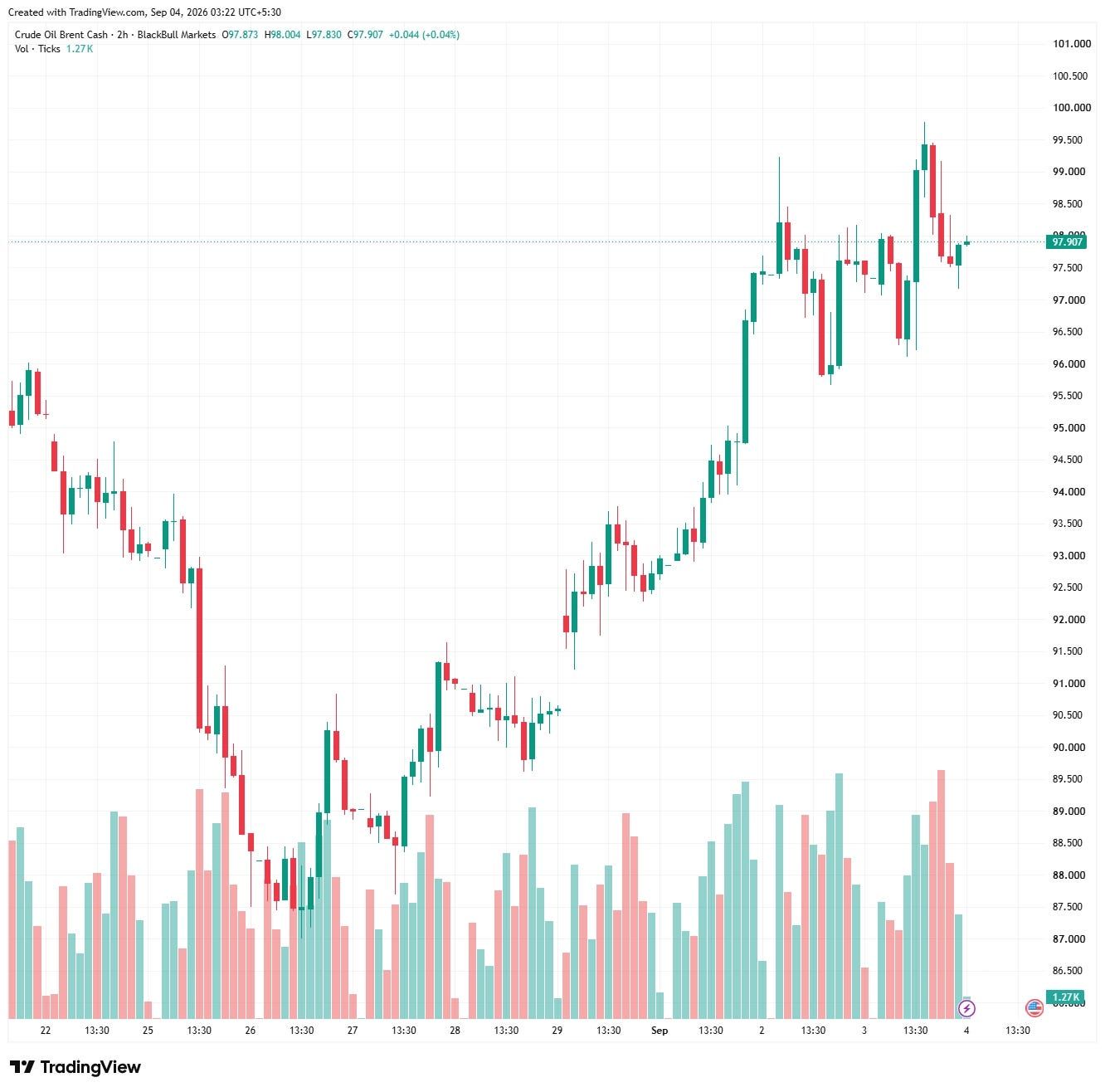
Brent went from about $88 on August 28 to near $95 by September 3, up 8% over the week. Hormuz is the strait between Iran and Oman, and it carried about a fifth of the world’s seaborne oil and gas before the war.
Then on September 2, US Energy Secretary Chris Wright (America’s petroleum minister) told CNBC that August 31 was the record. More than 17 million barrels crossed by ship, the most since the war opened on February 28, against about 20 million a day before it.
Here is the part that makes this the most interesting chart we saw all week. If supply is back at pre-war levels, it should pull the price down. Instead it went up 8%. Assuming commodity charts never lie, this one has left some of the smartest minds in finance puzzled. Start with the fact that three counts of the same day do not agree.
Chris Wright, on CNBC: 17 million barrels on August 31. TankerTrackers, an independent shipment tracker: 9.14 million, including the bypass routes. Kpler, a cargo analytics firm, preliminary and unverified: five vessels, none of them liquid tankers.
Samir Madani, co-founder of TankerTrackers, said Wright is stacking several days into one. He called it mathemagics. The other candidate is force. US forces hit Iranian launchers on Larak Island on August 30, Iran fired back at American bases, and two Saudi supertankers were struck minutes apart late on August 31.
This is only speculation, a few plausible explanations for the price action we saw. It is interesting because nobody knows what’s up, and time will tell. The chart is worth your time because the climb came while the physical flow said otherwise.
These deep financial markets have become incredibly forward looking. Get a chance to trade them at any hour of the day.
Mochatrade is in closed beta (waitlist only), completing regulatory approvals. Markets coverage is educational, not investment advice.
Educational content only. Not investment advice.
MochaLearn is a free A to Z course on understanding and trading US stocks and commodities, built for Indian traders.
Terms in this story
- S&P 500The S&P 500 is about five hundred of the largest American companies, weighted by market value, and the number money is…
- RevenueRevenue is the total money a company takes in from sales before any costs, the top line. Growth companies are judged…
- CPICPI, the consumer price index, is the monthly US measure of what a basket of goods and services costs households…
- Strait of HormuzThe Strait of Hormuz is the stretch of water between Iran and Oman that carried about a fifth of the world's seaborne…
- Open interestOpen interest is the total size of all open positions in a contract, how much money is in the trade. Rising open…
- BetaBeta measures how much a stock has moved relative to the market: 1.5 means it has historically moved 1.5% for each 1%…