September 6, 2026 · Mochatrade · 4 min read
Salesforce Was Left for Dead by the AI Trade. One Number Says Otherwise.
Salesforce fell to $146 a share this year on fears that AI agents would kill the software seat. Then it reported the quarter that argues the opposite.

Salesforce was supposed to be one of the casualties. When the AI-agent scare hit software stocks in April 2026, Salesforce fell along with the rest of the sector, and by the time the selling stopped, the stock had dropped more than 40% from its highs to $146. On August 26, it reported a number that pushes back on that story directly.
Why US Software Walked in Already Bruised
US IT stocks didn’t need a new reason to be distrusted, they’d been getting hit since 2022, for a completely different reason. When the Fed started raising rates that year, every software company trading on a growth-now, profit-later multiple got repriced overnight. Salesforce itself fell more than 40% in 2022, well before anyone was talking about AI agents.
Then the AI boom actually showed up, and for a while it read as good news for software companies. They had the data, the customers, the distribution already built. Nobody was worried yet.
That changed by 2025 and 2026, once AI agents got good enough to actually do the work a person using a $200-a-month seat license used to do. The question stopped being who benefits from AI, and became who does AI replace. Software billed per seat looked like the most exposed business model in the market. That fear wiped out roughly $2 trillion of software market value in 48 hours in April, and Salesforce went down with it.
The Headline Everyone Saw
● Revenue of $11.35 billion, up 11% year over year, close to what analysts expected
● Adjusted profit per share of $5.90, more than double last year’s figure
● Full-year revenue guidance raised to $46.1 to $46.4 billion
● The stock jumped nearly 13% the moment the print landed, and kept climbing from there
A strong quarter. But like Caterpillar’s revenue line, this only tells you what already happened.
The number That Actually Matters
Skip the revenue line and look at something Salesforce calls Agentic Work Units, or AWUs. Every time one of its Agentforce AI agents finishes a task for a customer, that’s one unit. Not a signed deal. Not a forecast. Work that got done.
● Agentforce delivered 3.2 billion of these in the quarter alone, up 97% from the prior quarter
● Total delivered so far: 7 billion
● Agentforce annual recurring revenue passed $1.5 billion, up 240% year over year
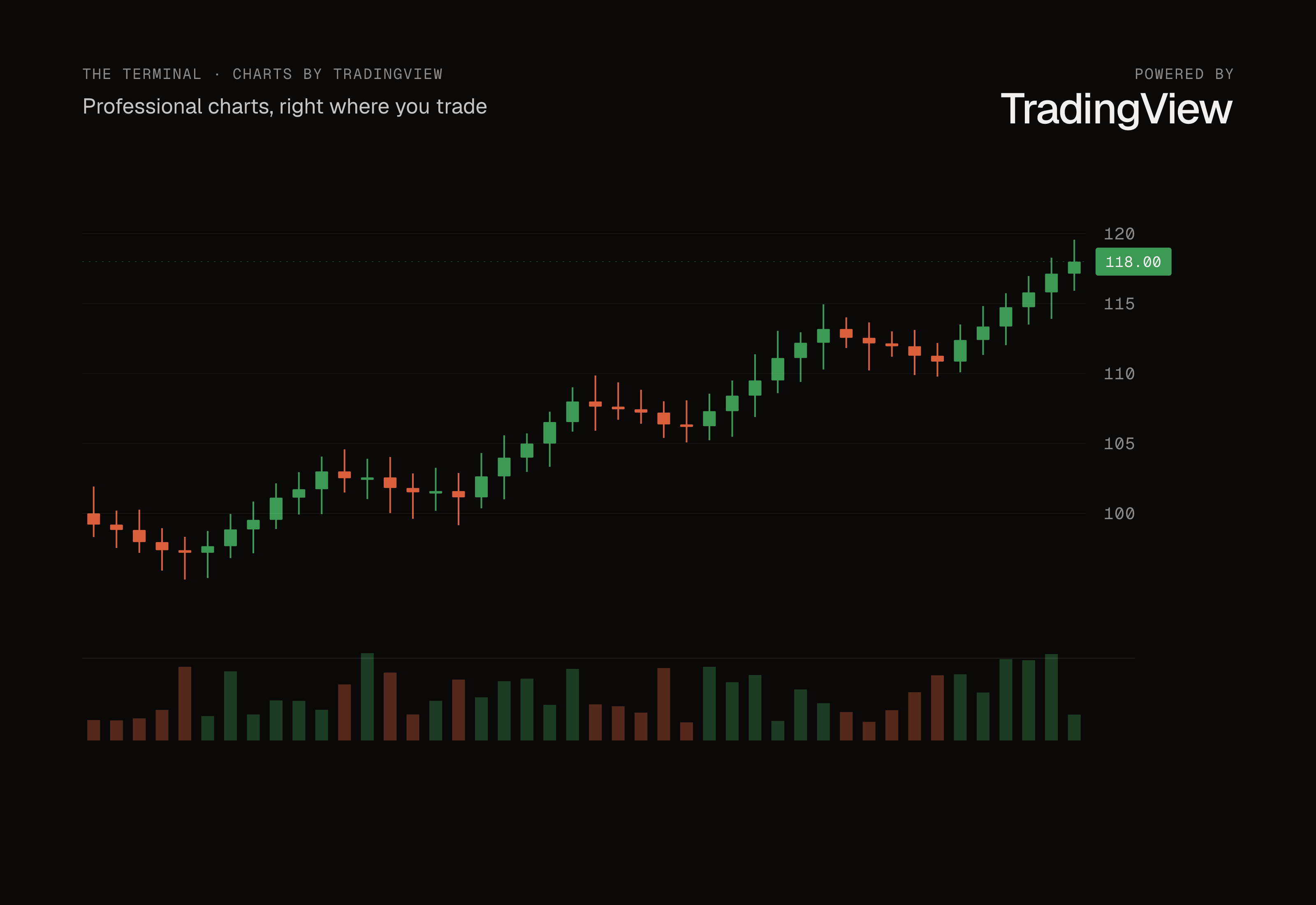
Salesforce’s share price this year: from the April low to near its 52-week high
Contracts can be optimistic. Completed work is harder to dress up. If AI agents were replacing Salesforce instead of running inside it, this number should be flat, maybe shrinking. It nearly doubled in three months.
The fear said software companies would lose their seat at the table. Salesforce’s usage numbers say the seat just changed shape.
The Bull Case
Usage nearly doubling in a single quarter is early-adoption behavior, not a one-off spike. Benioff has also leaned into partnering with Anthropic instead of treating outside AI models as competition, so Salesforce is positioning itself as the layer agents run through, not something they get routed around. The stock’s climb from $146 back toward $269 says the market is starting to believe it.
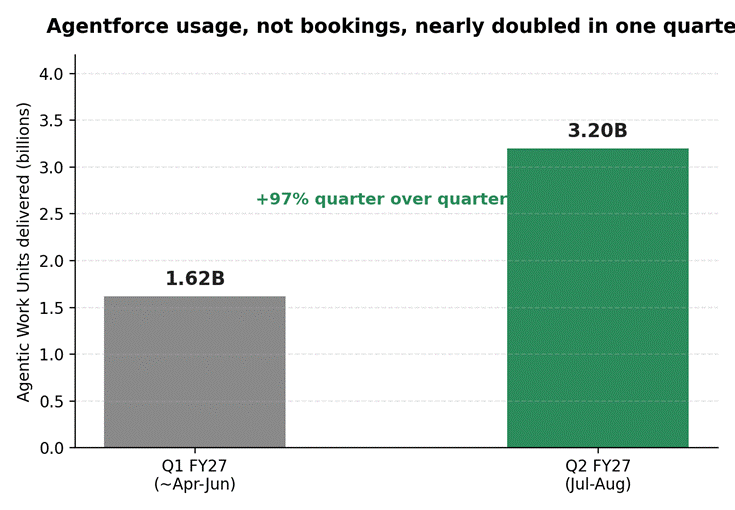
Agentic Work Units delivered per quarter, nearly doubling quarter over quarter
The Bear case, and it’s a Real one
Here’s what should slow you down. Over $2.6 billion of that headline profit beat came from gains on Salesforce’s own investment portfolio, not from selling more software. Pull that out and the record profit looks a lot more ordinary. Current remaining performance obligation, the closest thing Salesforce has to a forward backlog, grew just 14%, well behind the pace of AWU and ARR growth. The usage boom hasn’t fully worked its way into booked revenue yet. Agentforce ARR, for all its growth, is still under 4% of total revenue guidance. It’s a fast-growing sliver, not yet the business. And the stock has already run from $146 to near $269, so a fair amount of optimism is priced in before you’d even buy Salesforce stock today.
What Most People Skipped
The debate got framed as will AI kill the SaaS seat. Salesforce’s usage numbers point to a narrower question instead: not whether companies still need software vendors, but whether the incumbent or some newcomer ends up owning the layer AI agents actually run through.
A signed contract can be softened by a footnote about investment gains. Completed work can’t be. The number worth watching next quarter isn’t revenue, it’s whether that 97% AWU growth holds as the base gets bigger, and whether the backlog finally catches up.
Educational content. Not investment advice. Figures approximate and as of early September 2026. Do your own research.
Educational content only. Not investment advice.
MochaLearn is a free A to Z course on understanding and trading US stocks and commodities, built for Indian traders.
Terms in this story
- RevenueRevenue is the total money a company takes in from sales before any costs, the top line. Growth companies are judged…