August 10, 2026 · Mochatrade · 5 min read
Mocha Markets Weekly
A surprise fall in US jobs pushed stocks to record highs, as investors bet the Fed will hold off on rate hikes. SpaceX also opened its books for the first time.

The US economy did something unusual on Friday. It reported that employers cut 23,000 jobs in July, when economists had expected about 80,000 to be added. Weak jobs data normally worries investors. This time, stocks rose to record highs.
The reason sits with the Federal Reserve, the US central bank, which had recently been leaning toward raising interest rates to fight inflation. A soft jobs report makes that harder to justify, so bad news for the economy became good news for the market. By Friday’s close, the odds of a September rate increase had dropped to about 44%, from around 67% a week earlier.
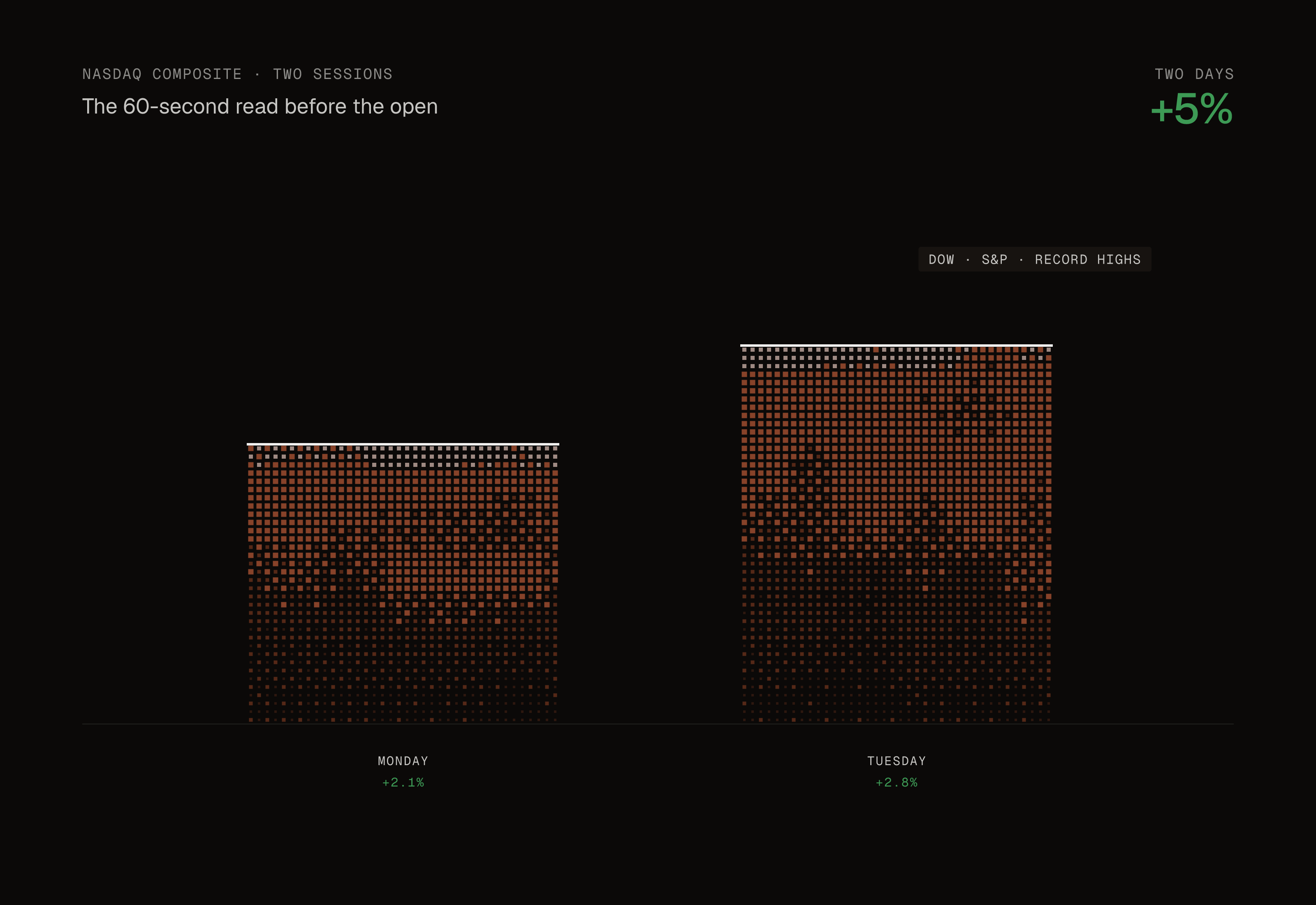
The S&P 500, the index of 500 large US companies, finished at a record, up 3.6% on the week. The Nasdaq rose 5.2%, its best week since April. It set the tone for a strong week. All three main US indexes closed at record highs, helped by an unlikely source: a weak jobs report.
Musk’s First Report Card
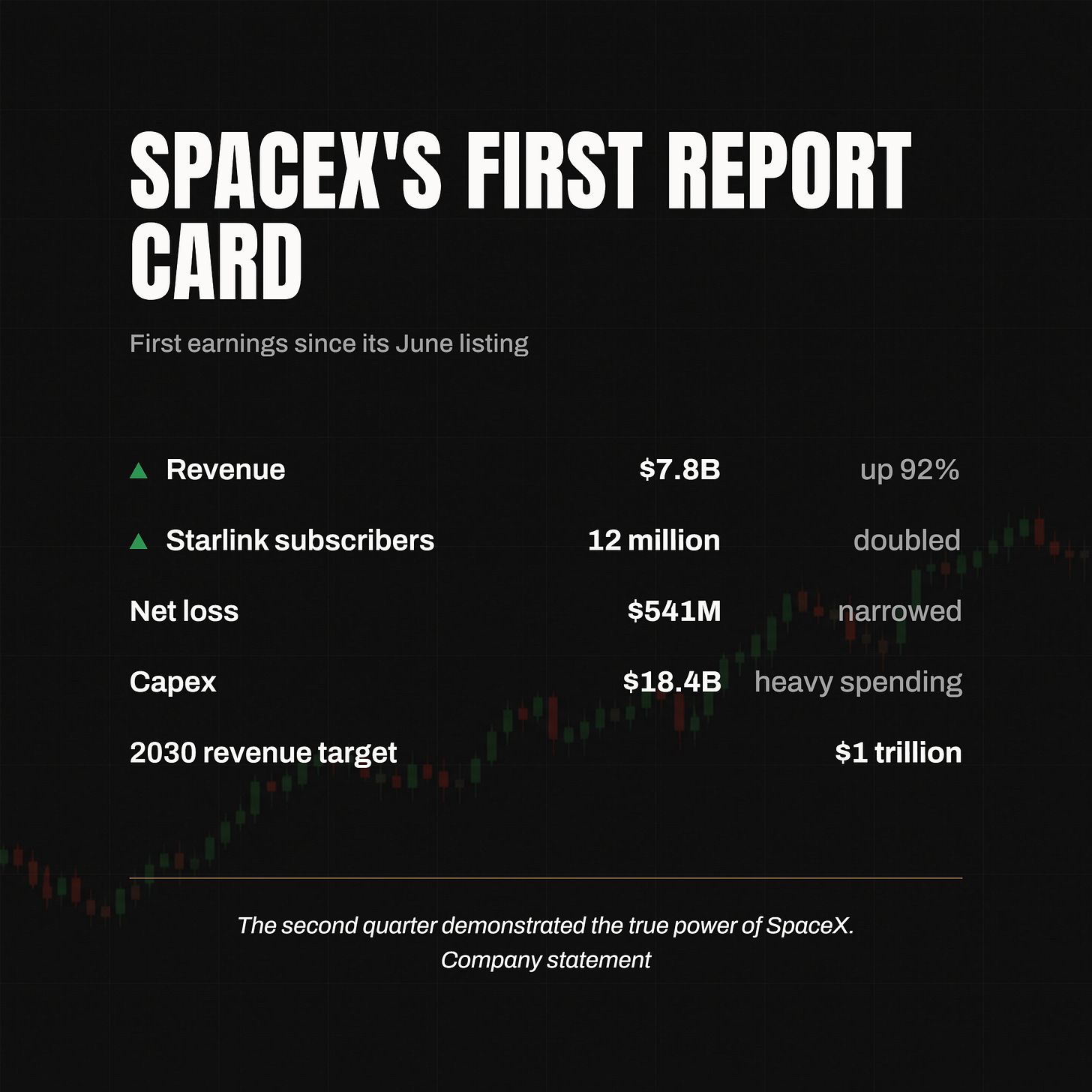
SpaceX reported revenue of $7.81 billion for the quarter, about ₹74,000 crore, nearly double what it earned a year earlier. Most of that came from Starlink, its satellite internet service, which now has 12 million subscribers, twice as many as a year ago.
The company is still losing money, but less than before. Its loss narrowed to $541 million, from about $1 billion a year earlier. The reason it keeps losing money is that it keeps spending. Capital expenditure, the money a company puts into long term assets, here rockets, satellites, and AI, reached $18.4 billion in a single quarter, about ₹1.75 lakh crore.
Musk is asking investors to look past that. Management said the company is on track for a $100 billion annual revenue pace by the end of this year, and set a target of $1 trillion in yearly revenue by 2030. Those are bold goals for a company that has yet to turn a full year profit.
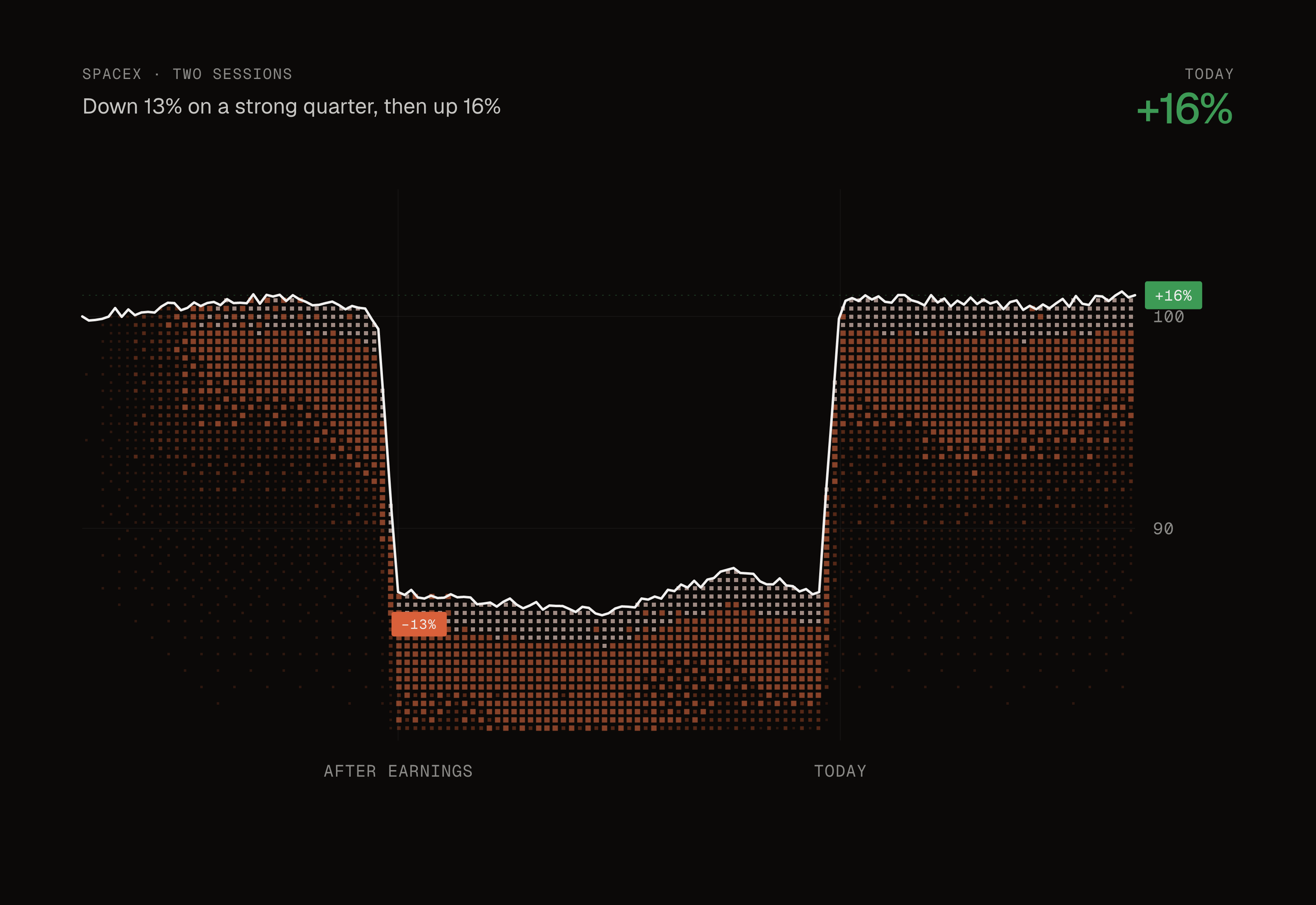
Investors hesitated at first. The stock fell about 8% right after the report as they absorbed the heavy spending. Then it turned, climbing about 16% on Friday and ending the week up roughly 19%, as attention shifted back to Starlink’s growth and the longer term promise.
A Jobs Report That Lifted Stocks
The bigger surprise came on Friday. The US said its economy lost 23,000 jobs in July, when economists had expected it to add about 80,000. Earlier months were revised lower too.
Normally, weak jobs data worries investors. This time stocks rose. The reason is that the Federal Reserve, the US central bank, had recently been leaning toward raising interest rates to fight inflation. A soft jobs report makes a rate rise harder to justify. So bad news for the economy became good news for the market, because it lowered the chance of higher rates.
By Friday’s close, the odds of a September rate increase had dropped to about 44%, from around 67% a week earlier. The S&P 500, the index of 500 large US companies, finished at a record, up 3.6% on the week. The Nasdaq rose 5.2%, its best week since April.
One caution is worth noting. The unemployment rate actually fell, to 4.1%, but mainly because people stopped looking for work, not because hiring picked up. A shrinking workforce is not the same as a healthy one.
Palantir and the Chip Comeback
The week’s other standout was Palantir, the data and AI software company led by Alex Karp. Its stock jumped about 30% after results beat expectations and it raised its forecast, now guiding to full year revenue above $8 billion. Demand from US businesses for its AI tools grew sharply.
Chip stocks joined in. AMD reported during the week, Intel posted what its chief executive called its best revenue growth in more than 15 years, and the wider semiconductor group rallied, with a popular chip index up more than 7%. After weeks of worry over AI spending, sentiment around chips has clearly turned.
Oil, Gold, and the Rupee
Oil had a choppy week. Prices fell early on signs of fresh talks with Iran, then bounced when Iran announced new restrictions on ships passing through the Strait of Hormuz. US crude ended lower, near $77 a barrel.
Gold moved the other way, and this was one of the week’s biggest stories. It climbed to a record above $4,400 an ounce, about ₹4.2 lakh, as the weak jobs data lifted hopes of lower interest rates. Gold tends to rise when rates fall, because it pays no interest of its own and looks more attractive by comparison.
The rupee held around 95.1 per dollar, near its weakest of the year, still pressured by high oil import costs and a firm dollar.
What to Watch Next Week
US inflation data on Wednesday. After the weak jobs report, a soft reading would strengthen the case that the Fed is finished raising rates.
More retail earnings, which show how US shoppers are holding up.
Fresh headlines on Iran and the Strait of Hormuz, which keep moving oil.
Crypto Corner
Bitcoin was little changed through a quiet week, holding near $64,900, about ₹62 lakh. Ethereum, the second largest cryptocurrency, edged up to around $1,900, about ₹1.8 lakh.
There was a small sign of steadier demand. US Bitcoin funds took in $233 million on Thursday, led by BlackRock, ending a short run of withdrawals. Even so, July’s total inflows were the smallest since these funds launched, a sign large investors remain cautious.
Learn with MochaTrade
Lockup period. When a company first sells shares to the public, its founders and early investors usually agree not to sell their own shares for a set time, often a few months. That window is the lockup period. When it ends, a large number of shares can suddenly become available to trade, which can push the price down as supply rises. This week the first lockup on SpaceX shares expired, freeing close to a billion shares, one reason the stock swung so much.
Follow Mochatrade for clear, simple breakdowns of the global markets, companies, and events shaping where money moves next.
For educational purposes only, not investment advice. Trading carries risk, including loss of capital. Figures approximate. Do your own research.
Sources: Reuters, Bloomberg, CNBC, CBS News, NPR, Yahoo Finance, TheStreet, Trading Economics, US Bureau of Labor Statistics. Numbers current as of the close on Friday, August 7, 2026. USD to INR about 95.1.
Educational content only. Not investment advice.
MochaLearn is a free A to Z course on understanding and trading US stocks and commodities, built for Indian traders.
Terms in this story
- Federal ReserveThe Federal Reserve is the US central bank, built in 1913 after the 1907 bank runs were stopped by one banker. It sets…
- S&P 500The S&P 500 is about five hundred of the largest American companies, weighted by market value, and the number money is…
- NASDAQNasdaq is the American exchange that began in 1971 as one screen showing every dealer quote side by side, the first…
- RevenueRevenue is the total money a company takes in from sales before any costs, the top line. Growth companies are judged…
- Unemployment rateThe unemployment rate is the share of the US labour force that wants work and has none, from the same BLS release as…
- Strait of HormuzThe Strait of Hormuz is the stretch of water between Iran and Oman that carried about a fifth of the world's seaborne…