July 27, 2026 · Mochatrade · 6 min read
Mocha Markets Weekly
Big Tech’s $800 Billion Day: Tesla and Google Rattled Wall Street
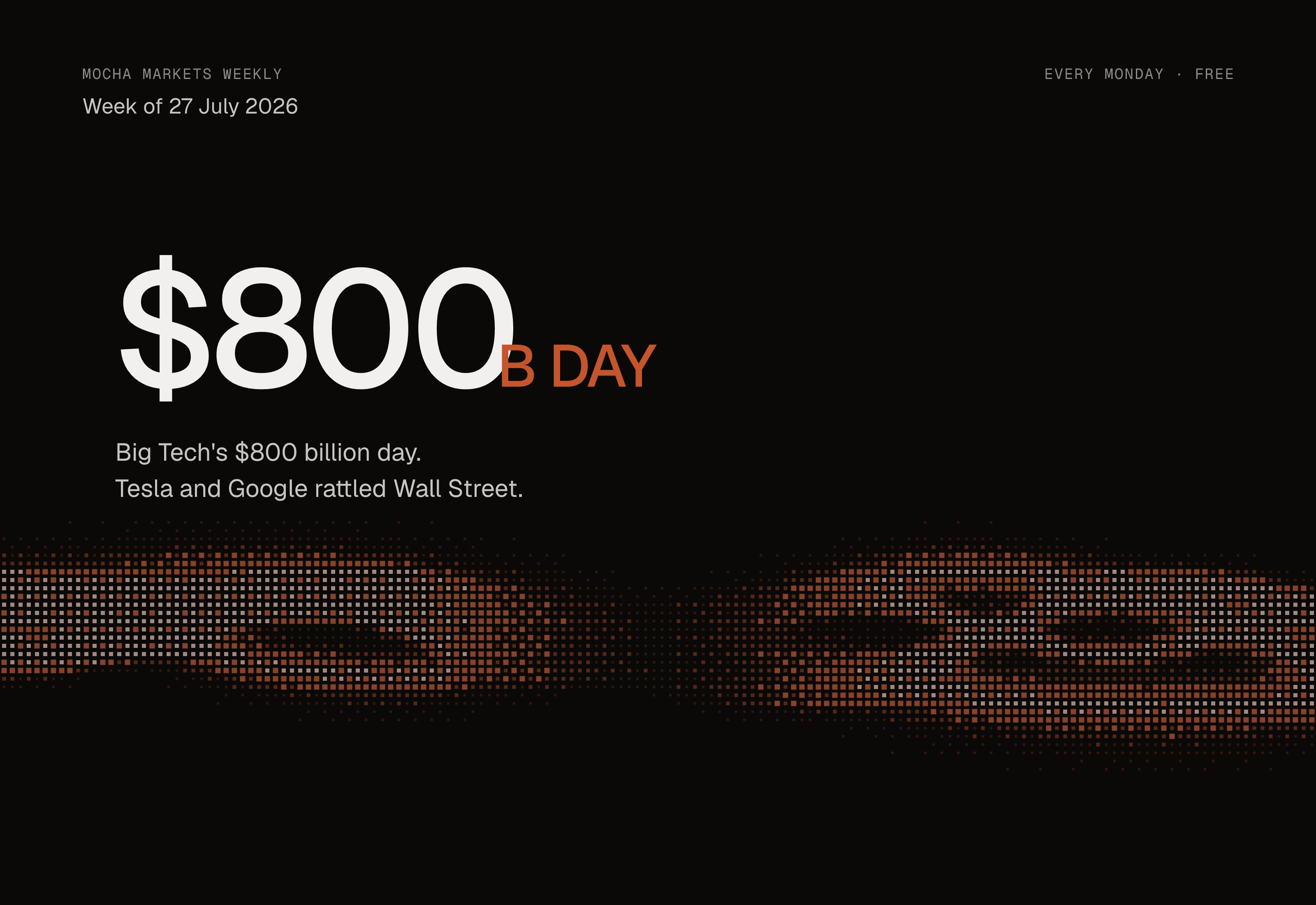
Alphabet and Tesla earnings set off the biggest Magnificent Seven selloff since April 2025. Oil topped $100 and the rupee slid to a two month low.
Big Tech finally got a bill for its AI dreams, and investors did not like the number. In a single day this week, the Magnificent Seven lost about 800 billion dollars in value, roughly ₹77 lakh crore, their worst day since April 2025.
This was not a crash. It was a repricing. For three years, Wall Street cheered every time these giants announced a bigger AI budget. This week it started asking a much harder question: when does all that spending actually turn into profit?
What actually went wrong
It started with two names sitting in almost every Indian trader’s watchlist: Alphabet, the company that owns Google and YouTube, and Tesla.
Alphabet’s results were not weak. Sales grew nicely. The problem was the spending plan. The company said it would pour as much as 200 billion dollars, about ₹19 lakh crore, into AI this year, well above what the market expected. Investors saw a giant bill with no clear payoff date, sold first, and asked questions later. The stock fell about 8.5 percent on the week.
Tesla’s story was sharper, and worth understanding in full, because it is a lesson in reading past the headline.
On the surface, Tesla had a great quarter. It delivered a record 480,126 cars, up 25 percent from a year ago, and revenue hit a record 28.2 billion dollars. Stop reading there and you would expect the stock to jump.
It fell about 19 percent on the week instead. Here is the real reason. Tesla sold more cars but earned far less on each one. Operating profit dropped 57 percent, and its operating margin, the slice of every sale that survives as profit, shrank to just 1.4 percent. On top of that, roughly two thirds of the profit Tesla did report came from a paper gain on its stake in SpaceX, another Musk company, not from selling cars. Strip that out and the core car business looked thin.
Two more things worried buyers. The government subsidy income that used to pad Tesla’s margins has dried up for good, after the US scrapped the 7,500 dollar EV tax credit last year. And Elon Musk told investors Tesla will keep spending more than 25 billion dollars a year on AI, robots, and robotaxis for the next two to three years. More cars, thinner profit, heavier spending. That mix is why the stock cracked.
The one lesson to carry into next week
Record sales did not save Tesla. A revenue beat did not save Alphabet. What the market punished was spending without proof of return. That is the single most useful idea to take forward, because four more giants are about to sit the same exam.
Not everyone lost. Nvidia rose about 2 percent and Apple held up, because Apple has spent far less on the AI race and investors are rewarding that discipline. Money also rotated into energy, which climbed with oil, and into steadier corners like real estate and banks. The S&P 500 slipped below its 50 day average near 7,470, a level many traders use to read the trend, a hint that the easy gains may be on pause.
Oil tops $100, and the rupee feels it
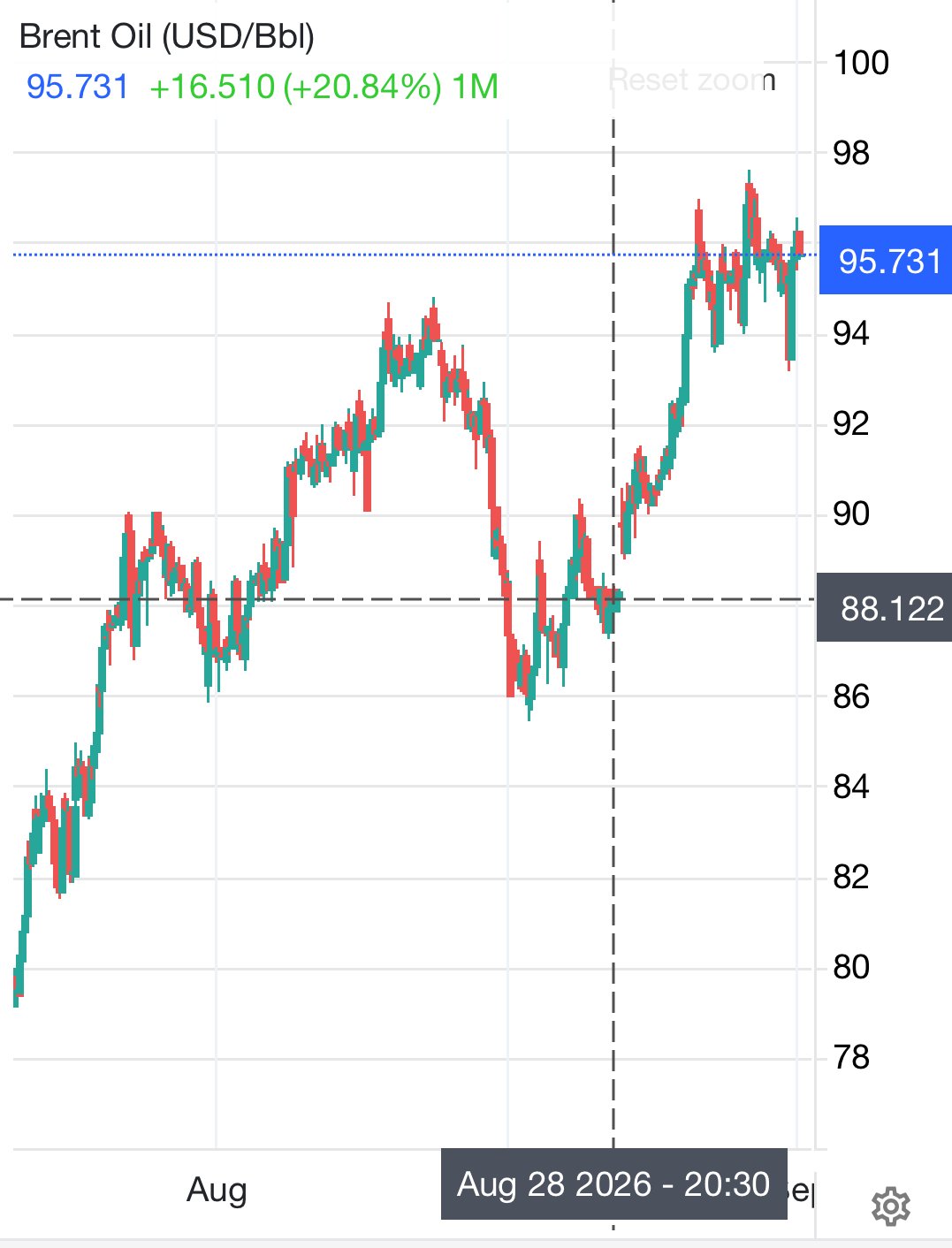
Brent crude briefly crossed 100 dollars a barrel, about ₹9,650, for the first time in two months as the Iran conflict entered its third week and shipping through the Strait of Hormuz stayed at risk. US crude ended near 90 dollars, about ₹8,700, up roughly 11 percent on the week.
This one lands close to home. India buys most of its oil from abroad, so dearer crude widens the import bill and drags on the rupee, which slipped to about 96.5 per dollar, near a two month low. Costlier oil also lifted US bond yields, with the 10 year Treasury yield, a benchmark that shapes borrowing costs worldwide, climbing to about 4.68 percent. Higher American yields tend to pull money out of emerging markets like India, one more reason this matters at home.
What to watch next week, and how to read it
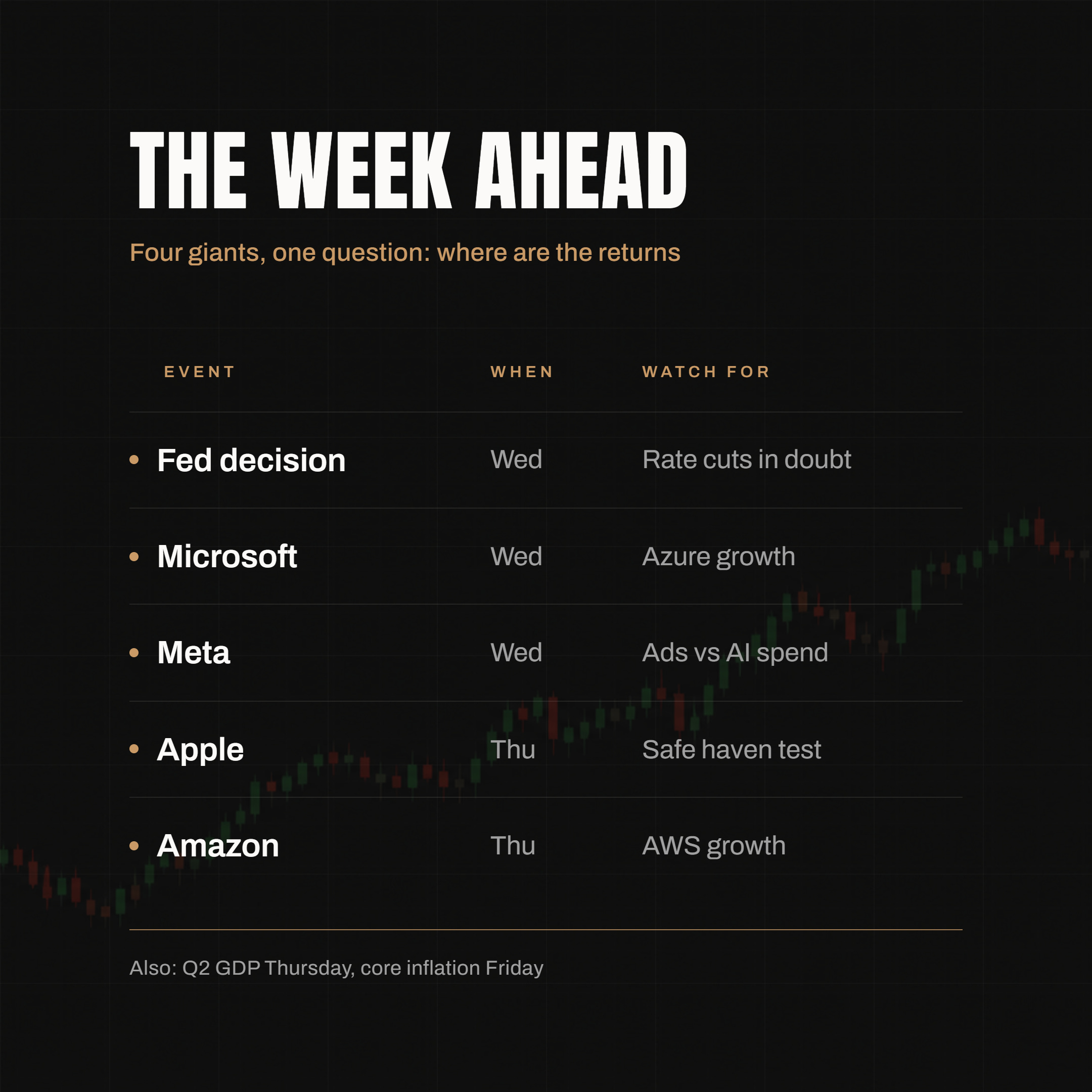
This is the busiest week of the season. The Fed and four of the Magnificent Seven all land within 48 hours, so expect big swings.
Wednesday, July 29 is the pivot. The Federal Reserve announces its rate decision at 2 pm New York time, with new Chair Kevin Warsh speaking at 2:30, past midnight in India. Warsh has leaned hawkish, and with oil feeding inflation, the market wants to know if rate cuts are now off the table for 2026. There is no fresh projection chart this time, so his tone is the whole signal.
That same evening, Microsoft and Meta report. Use the capex test. For Microsoft, watch whether its Azure cloud is growing fast enough to justify its AI bills. For Meta, watch whether ad revenue, guided to 58 to 61 billion dollars, is keeping pace with its climbing AI spend. Spend more without showing returns, and either could get the Alphabet treatment.
Thursday brings Apple and Amazon. Apple has been the market’s hiding place precisely because it spends less on AI, so any change there is a big deal. For Amazon, the cloud arm AWS is the number that counts. Round it off with Q2 GDP on Thursday, seen near 2.5 percent, and the Fed’s favourite inflation gauge, core PCE, on Friday.
And keep one eye on oil. Any fresh flare up around Iran will likely hit the rupee before it hits anything else.
Crypto Corner
Bitcoin ended the week roughly flat near 64,000 dollars, about ₹61.8 lakh, even touching 65,760 dollars midweek as Brent crossed 100. That was unusual. Bitcoin often slips when oil driven inflation fear rises, yet this time it held firm before easing as bond yields climbed.
Ethereum sat near 1,870 dollars, about ₹1.8 lakh. The dip had a clear trigger: US Bitcoin ETFs saw about 225 million dollars of outflows on Thursday, ending a run of nearly 1 billion dollars in inflows, as higher yields tempted some money back into bonds.
Learn with MochaTrade
Capital expenditure, or capex. Capex is the money a company spends on big, long term assets like factories, servers, or in this case AI data centres and chips. It is money spent to grow tomorrow, not to run the business today. The tricky part is timing. Alphabet and Tesla are spending record capex now, but the profit from it may take years, and this week investors decided they were done waiting. Picture a restaurant taking a big loan to open ten new outlets. Brilliant if they fill up, painful if they sit empty. Right now, Wall Street wants to see the tables filling.
Follow Mochatrade for clear, simple breakdowns of the global markets, companies, and events shaping where money moves next.
For educational purposes only, not investment advice. Trading carries risk, including loss of capital. Figures approximate. Do your own research.
Sources: Reuters, Bloomberg, CNBC, Yahoo Finance, Investing.com, Trading Economics, CoinDesk, US Federal Reserve. Numbers current as of the close on Friday, July 24, 2026. USD to INR about 96.5.