August 20, 2026 · Chetan Manda, Mochatrade · 2 min read
The Memory Shortage Nobody Is Talking About
RAM prices have jumped around 700% in a year. Here is what is driving it, and what it means for the stocks caught in the middle.
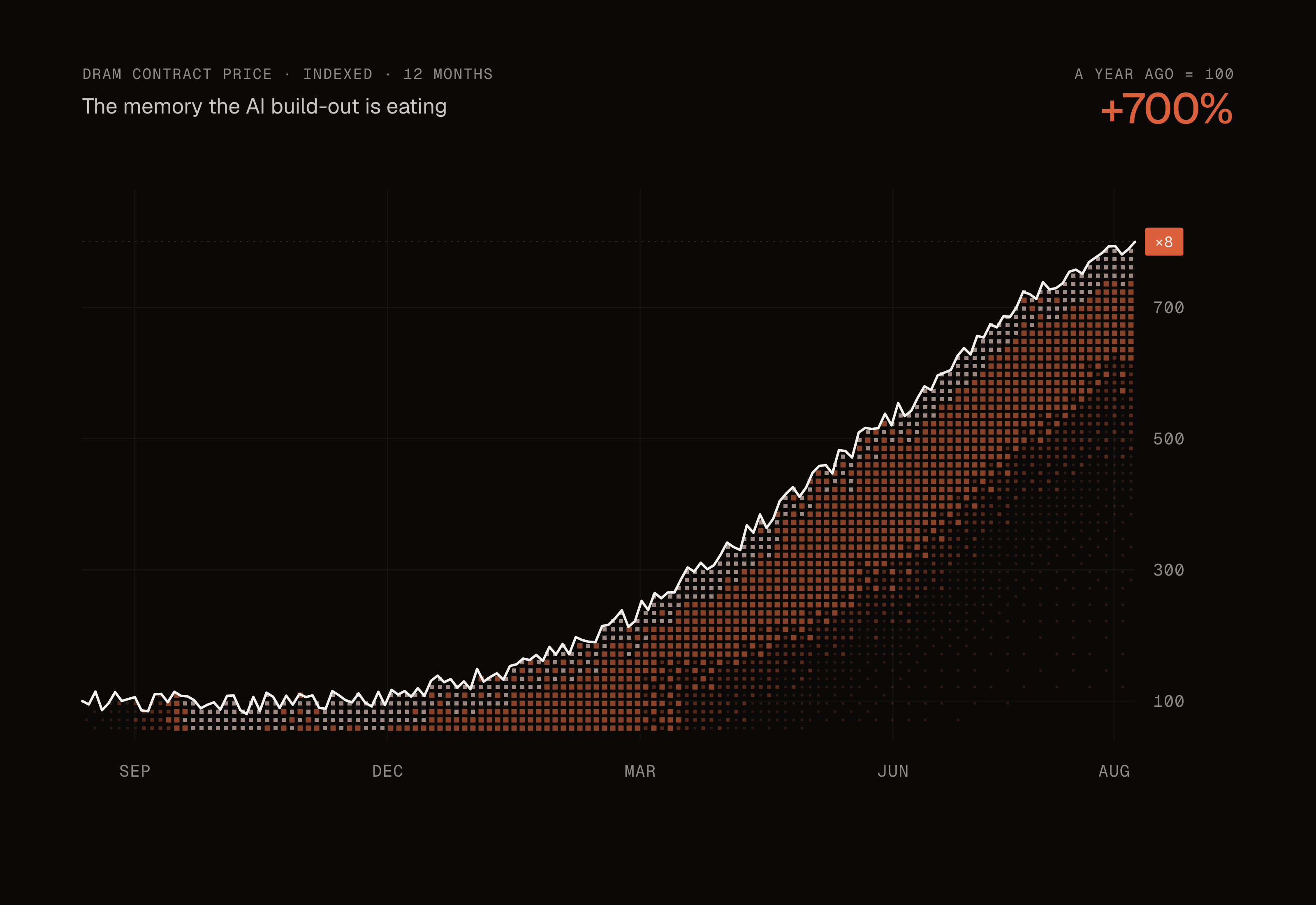
The price of computer memory has risen roughly 400% in a year. That is not a typo, and it is not getting the attention it deserves. It is reshaping who wins and loses in the AI trade.
I. What is actually happening
DRAM is the working memory inside every phone, laptop and car. It is made mostly by three companies. Samsung, SK Hynix and Micron control over 95% of the market.
All three are now shifting capacity toward a special AI version of memory that earns them three to five times more per wafer, and locking it into multi-year deals with data centres. That leaves far less for everything else, and prices have exploded higher.
II. Why it may last, and get worse
This is not the usual boom and bust. The demand pulling memory away is structural, and it is still growing.
The strain is already showing:
Data centres are on track to consume close to 70% of all memory made in 2026
Phone shipments are expected to fall about 13% this year, and PCs around 11%
Apple executives are reportedly booking long hotel stays just to lock in supply
One chipmaker’s own executive said 2027 will be tighter than 2026, with no clear end in sight. When a company as large as Apple is scrambling for parts, the squeeze is real.
The price of AI was never only paid by the tech giants. Some of it lands everywhere else.
III. The trade inside the problem
Here is what matters for an investor. The same shortage that raises costs for Apple and Tesla is pure pricing power for the three that make the chips.
Micron is the one listed in the US, and it has more than doubled in 2026, crossing a $1 trillion value, about ₹95 lakh crore, with one analyst calling its earnings power a structural reset.
That is the bull case. The bear case is history. Memory is brutally cyclical, these runs always turn, and if supply finally catches up, prices and profits can fall as fast as they climbed. Buying after a stock has doubled means the easy part may be gone.
So the real question is not whether the shortage is real. It clearly is. It is whether it lasts long enough to justify what the market has already paid.
The AI trade was never only in the chips everyone watches. Sometimes it hides in the boring memory feeding them.
Educational content. Not investment advice. Figures approximate and as of August 2026. Do your own research.
Educational content only. Not investment advice.
MochaLearn is a free A to Z course on understanding and trading US stocks and commodities, built for Indian traders.