July 26, 2026 · Mochatrade · 3 min read
Volume: The One Number That Tells You If a Move Is Real
Most traders stare at price. The ones who win are watching something underneath it.
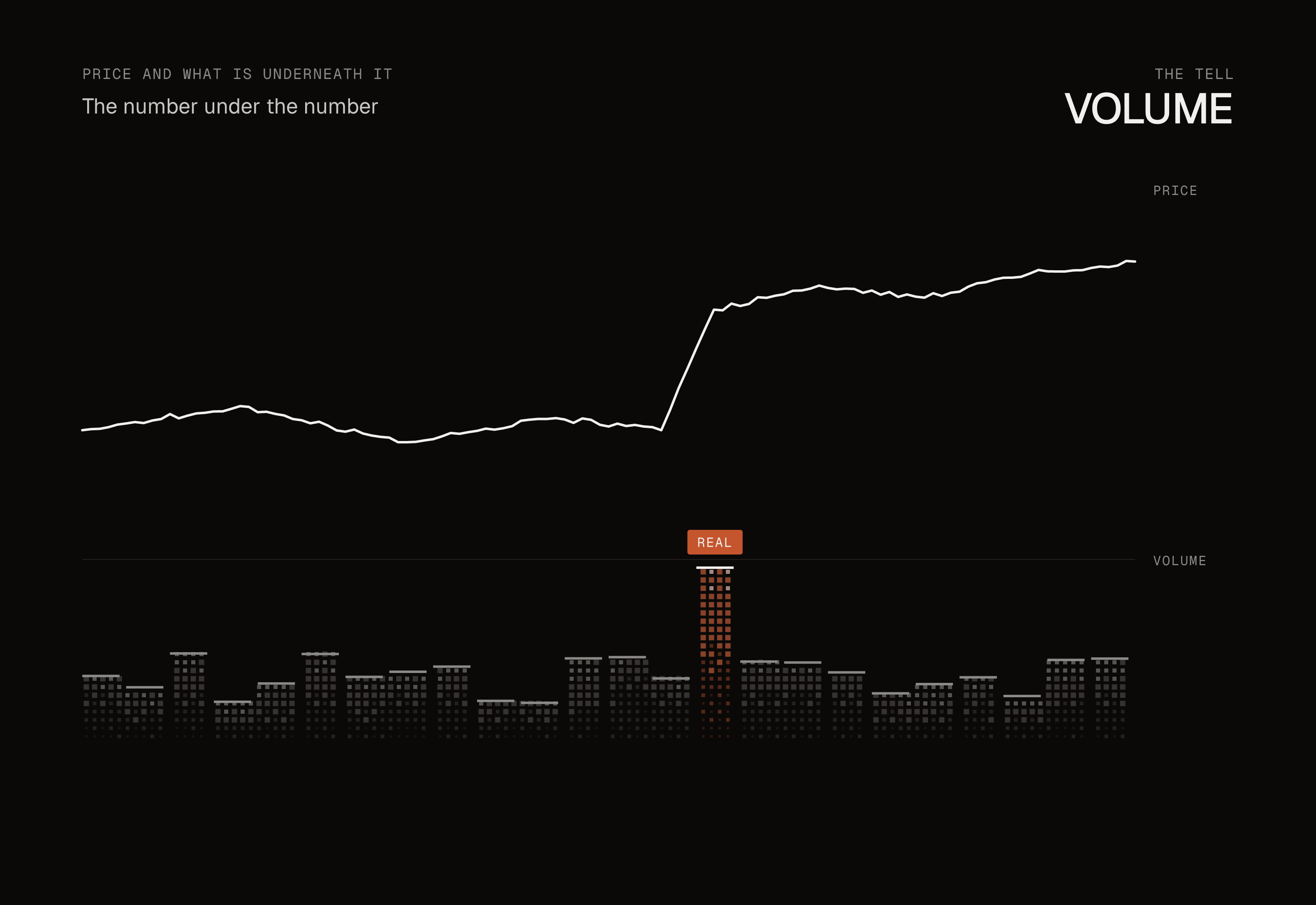
Open a chart tonight. Your eyes goes straight to the candles, up, down, green, red. Now look below them, at that row of little bars almost nobody pays attention to. That is volume and those boring bars often know more than the price does.
Price tells you what happened. Volume tells you whether anyone actually meant it.
What volume really is
Volume is simply how many shares changed hands in a period, drawn as bars below the price. A tall bar means heavy trading and real conviction. A short bar means a quiet, less movement.
But one bar alone tells you nothing. The trick is to read it against the recent average, a line most charts can draw for you. A move above that line has weight. A move below it is weak, no matter how exciting the price looks.
The one rule that matters
Here is the whole idea in a single line.
A price move on high volume is trustworthy. A move on low volume is a trap waiting for you.
This is exactly what most retail traders miss. They see a stock break above resistance, get excited, and buy, without ever looking at volume. If the breakout fails, below-average volume, almost nobody was behind it, and it the stock usually goes straight back down. The pros checked the volume first. That one habit changes the whole decision of the trade.
The setups that actually pay
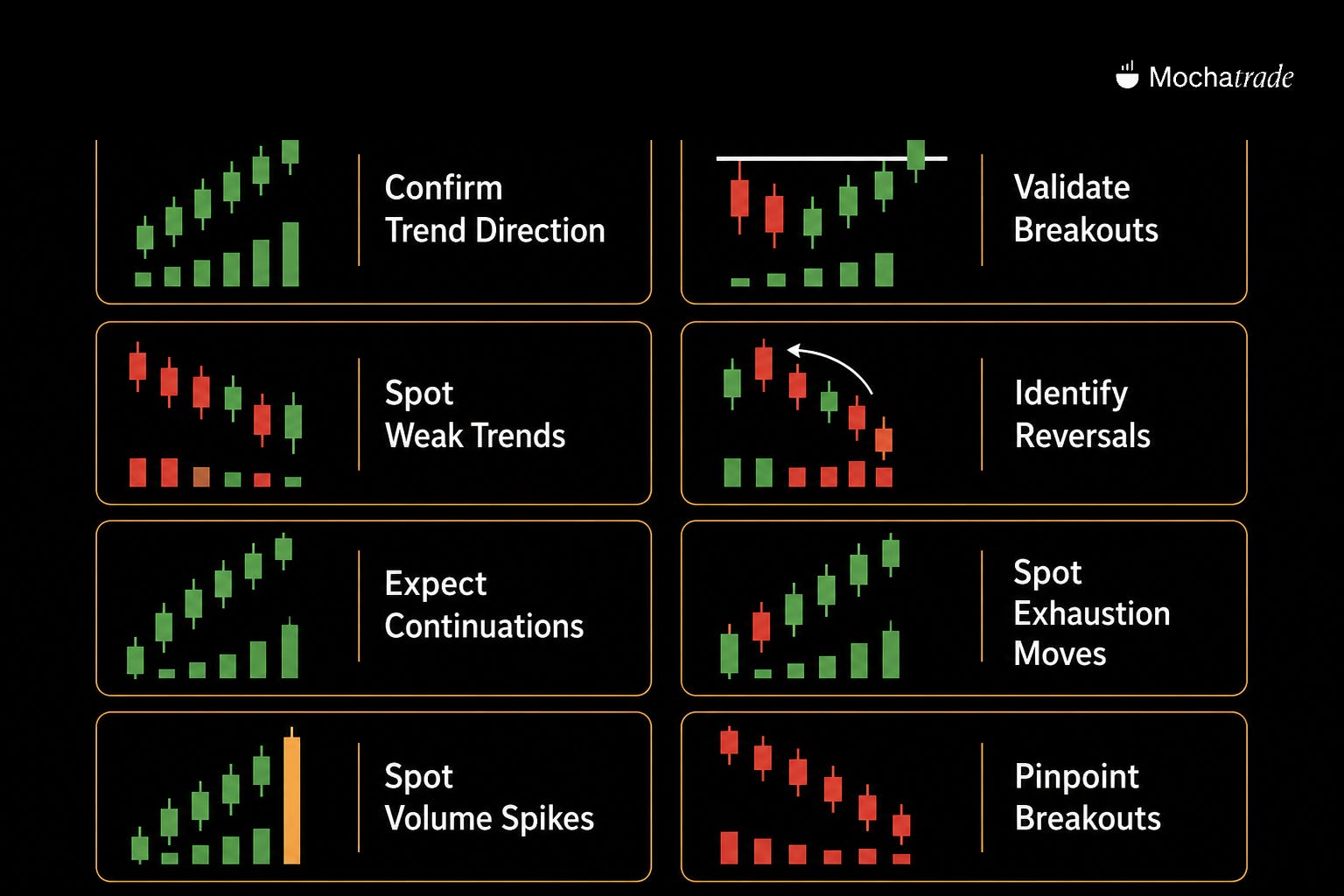
Once you start watching volume, a few real patterns jump out.
The real breakout. Price clears a resistance or support level on a big, above-average volume spike. That measn the crowd is genuinely in. That level usually tends to hold, and that is the breakout you can trust.
The exhaustion spike. After a long run, one giant bar, way bigger than the rest, usually means the end, not more to come. Everyone who wanted in is already in. Nobody left to push.
The dry-up. A pullback on shrinking volume is not scary. It means the selling is simply running out of breath, and the trend often picks back up.
How to actually use it
You do not trade on volume by itself. You use it as the last check before you commit. One question, every single time: is this move happening on healthy, above-average volume?
A breakout should arrive with rising volume, not shrinking volume. A bounce off support means far more if buyers show up in force. When price and volume agree, the move has real conviction. When they disagree, wait for the right entry, because the chart is quietly telling you to not take the trade at that moment.
Build that one habit, and you wont get trapped by the fake moves that trap everyone else, and catch the real ones and turn them into a more profitable trade.
Follow Mochatrade for clear, simple breakdowns of the global markets, companies, and events shaping where money moves next.
Disclaimer: For educational purposes only, not investment advice. Trading carries risk, including loss of capital. Do your own research.