July 25, 2026 · Mochatrade · 2 min read
Why Good Earnings Can Still Crash a Stock 10%
Beating the numbers is not enough. Here is how to actually read an earnings report.
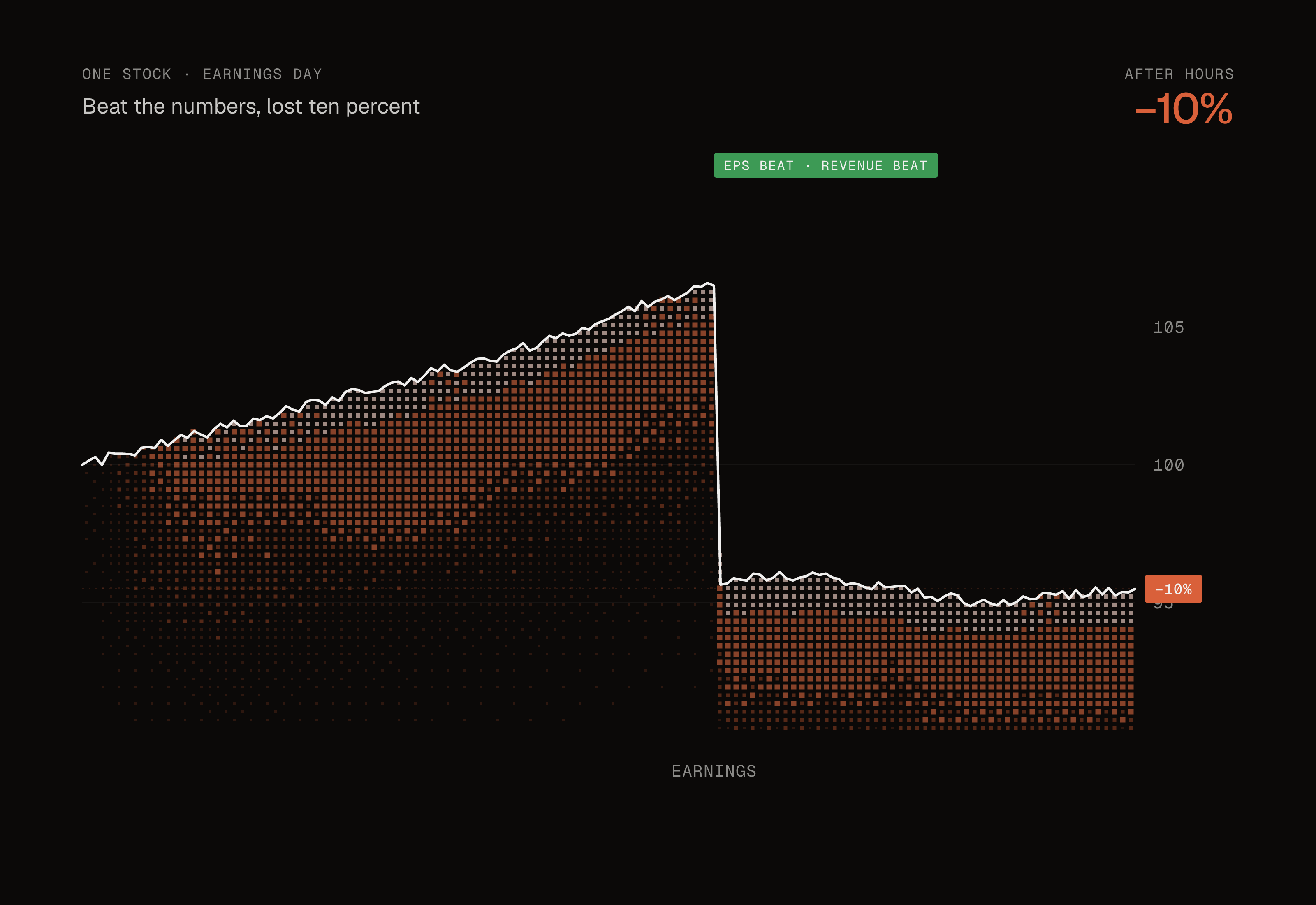
Tesla just did something confusing. It reported record revenue, sold more cars than ever, and its stock still fell about 14% in a single day. If good news makes a stock drop, something deeper must be going on. Once you understand it, you will read every earnings report differently.
What an earnings report actually is
Four times a year, every listed company opens its books and tells the world how it did. This is the earnings report. Think of it as a company’s report card, and there are a few lines that matter most.
Revenue. The total money the company brought in.
Profit. What is actually left after all the costs.
Margins. How much of each sale turns into profit, the real sign of health.
Guidance. What the company expects in the coming months. Often the most important part.
Learn to glance at those four, and you already understand more than most beginners.
The number nobody tells you about: expectations
Here is the secret that explains Tesla. Before any report, analysts have already predicted what the company will earn. That prediction is called the estimate, and it is quietly baked into the stock price.
So the stock does not move on whether the results are good. It moves on whether they beat or miss what the market already expected.
A stock trades on the gap between reality and expectations, not on good or bad alone.
Tesla’s revenue was strong, but its profit fell 57% and its margins shrank, coming in below what investors had priced in. Great headline, disappointing details. So the stock dropped.
Good news, falling stock. And the reverse.
This works both ways, which is what makes it powerful to understand.
A company can beat estimates and still fall, if its guidance for the future looks weak. And a company can post an ugly quarter yet rise, if the results were simply less bad than everyone feared. The market is always comparing reality to the story it had already told itself.
That is why you will see a stock jump 10% on a loss, or crash 10% on a record profit. The number itself is only half the picture.
How to read the next report like a pro
Next time a company you follow reports, do not just ask if the numbers were good. Ask three questions instead. Did it beat or miss what analysts expected? Were the margins improving or shrinking? And what did the company say about the future?
Answer those, and the market’s reaction will stop surprising you. Because in the end, a stock is not priced on what a company did. It is priced on what everyone already believed it would do.
Follow Mochatrade for clear, simple breakdowns of the global markets, companies, and events shaping where money moves next.
Disclaimer: For educational purposes only, not investment advice. Trading carries risk, including loss of capital. Figures approximate. Do your own research.