July 29, 2026 · Mochatrade, Mehul Jain · 4 min read
Workday: The Software Stock the Market Left for Dead, and Why It Is Waking Up
A research read on the company at the center of software's biggest fear: will AI replace it, or make it stronger?
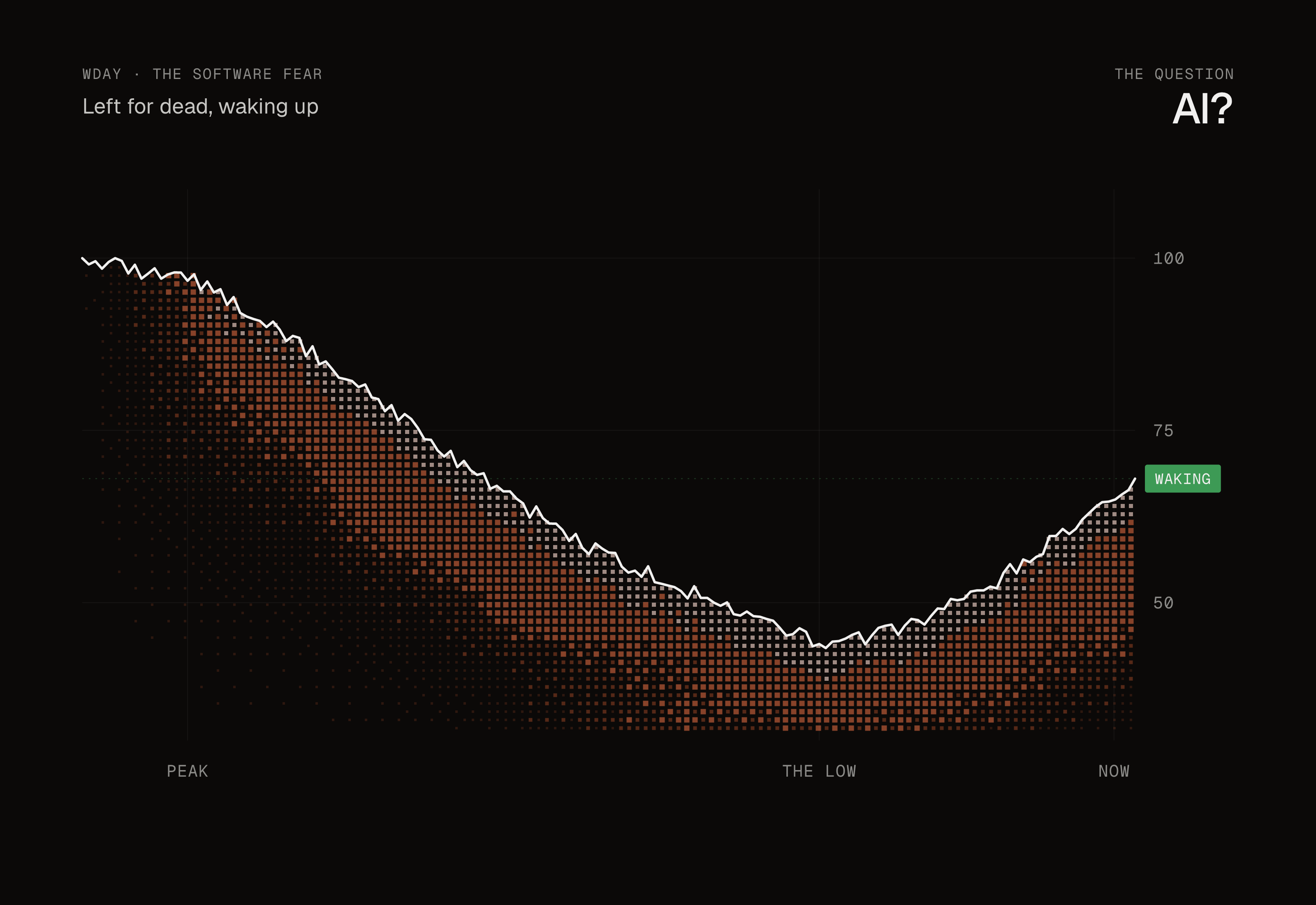
Earlier this year, investors decided Workday was in trouble. The stock fell about 39% in 2026, its worst run since going public in 2012. The fear was simple and brutal: if AI agents can do HR and finance work, who needs the software that used to do it?
That fear had a logic to it. Workday sells exactly the kind of software people assumed AI would eat first. So the market sold, hard, and the stock that once traded like a darling was suddenly priced like a victim.
Then the company reported, and the story cracked open.
What Workday actually is
Workday runs the HR and finance backbone of more than 11,500 companies, including over 65% of the Fortune 500, covering 80 million employees. Payroll, hiring, budgeting, all of it lives inside Workday. Ripping it out is slow, risky, and expensive, which is exactly why customers rarely do. That stickiness is the whole foundation of the business, and it matters enormously for what came next.
The quarter that changed the narrative
In its most recent quarter, ended April 2026, the numbers quietly argued the opposite of the panic.
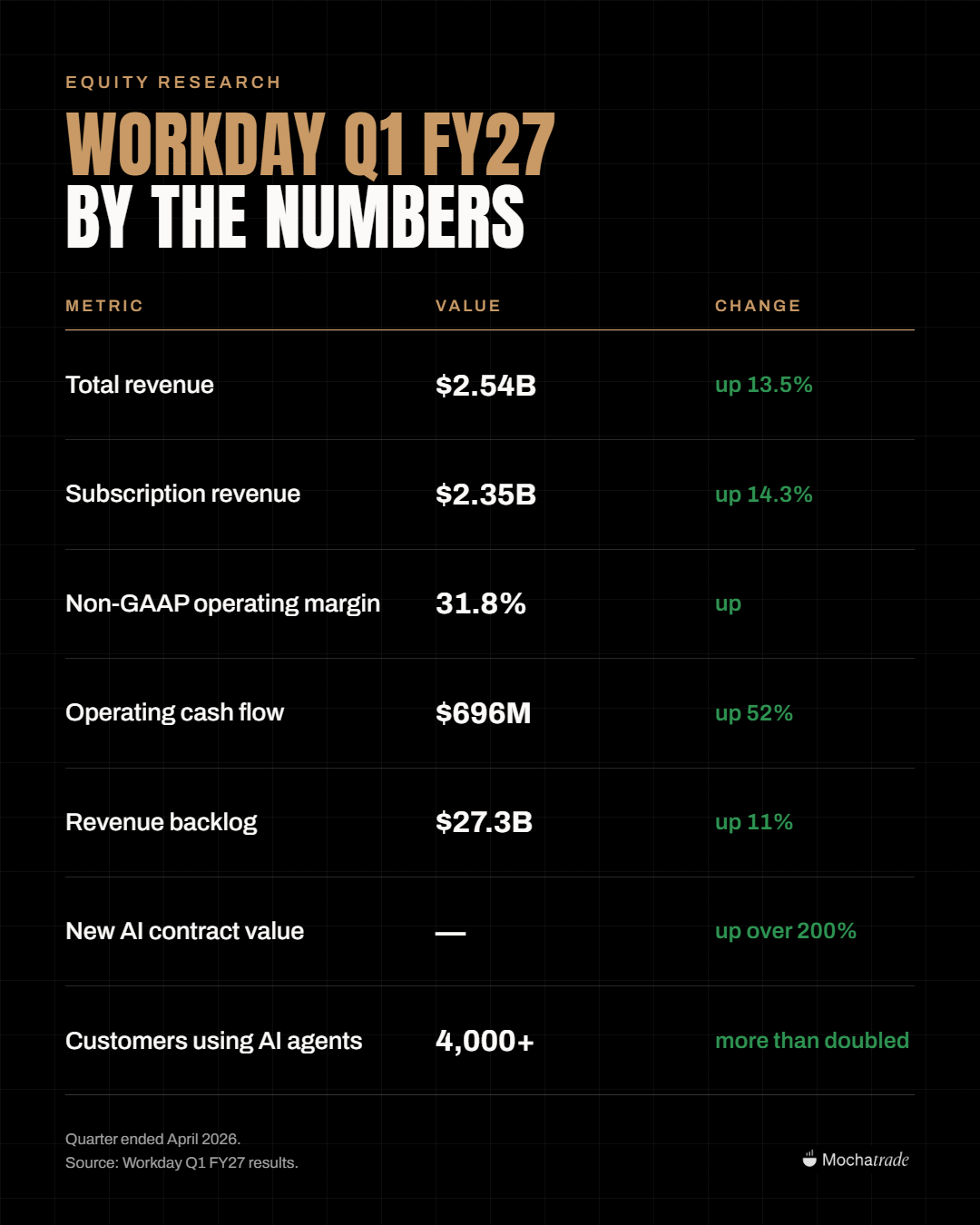
Revenue grew about 13.5% to $2.54 billion, the non-GAAP operating margin expanded to 31.8%, and cash flow jumped, with operating cash flow up 52%. This was not a company being hollowed out by AI. It was a company getting stronger.
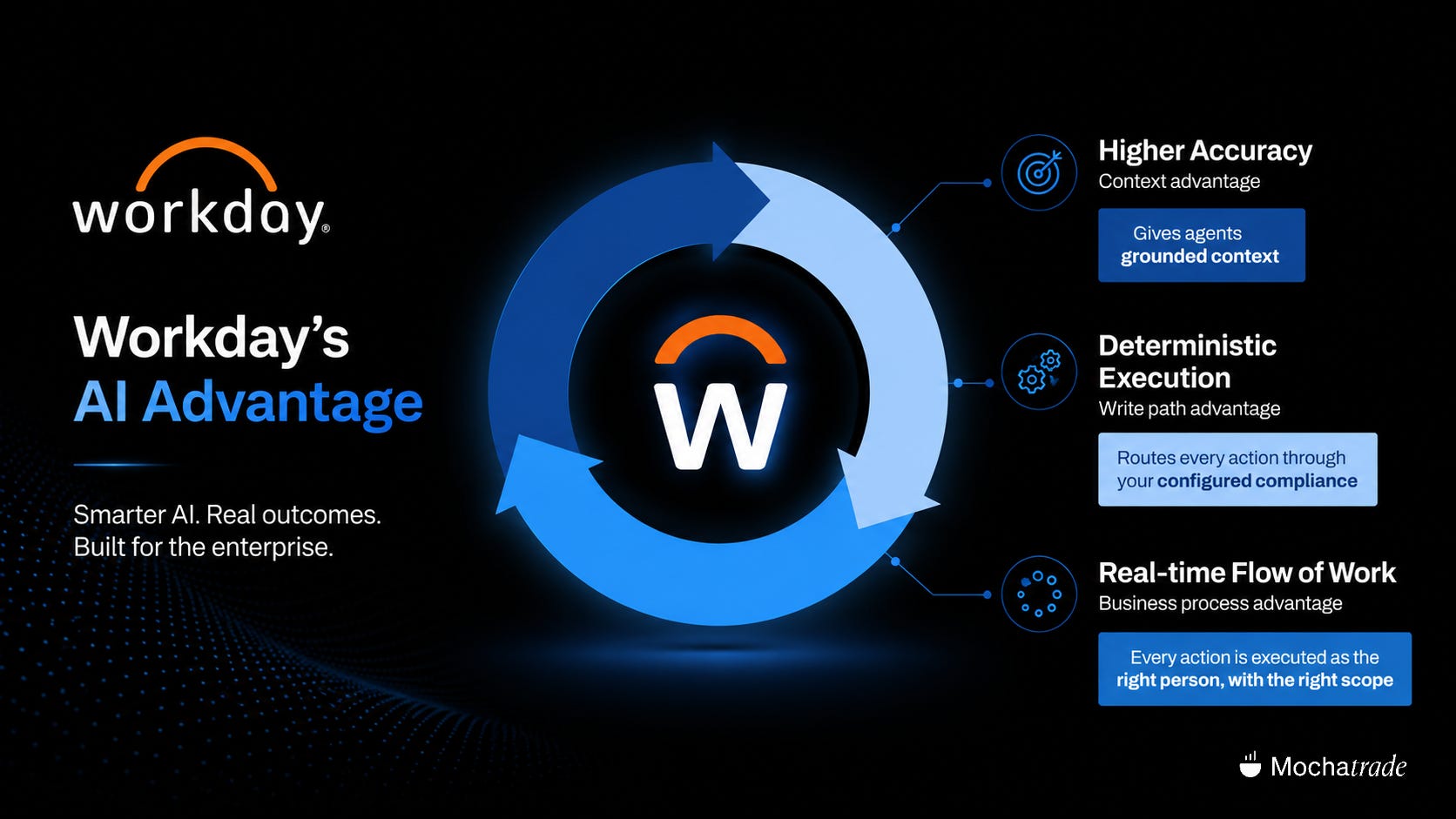
But the real twist was in the AI lines themselves. New AI-related contract value grew over 200% from a year earlier. Deals that include AI are more than 50% larger. And over 4,000 customers now use at least one Workday AI agent. The thing investors feared would kill Workday was instead making each customer worth more.
The reason is subtle but powerful. Workday’s AI agents plug directly into the payroll, hiring, and finance data it already holds. A fresh AI startup cannot easily copy that, because it does not sit on decades of a company’s most sensitive records. AI without that context is a clever assistant. AI with it is running your business.
The turnaround, and the honest risks
The stock has started climbing back as the market slowly reprices this. But a good analyst does not celebrate early, so here are the real risks.
Growth has cooled from the old hyper-growth days to the low-to-mid teens, and guidance for the year ahead was only modest, which is what unsettled investors in the first place. There is a genuine long-term question of whether AI lets companies run leaner and buy fewer software seats over time. And Workday now fights Salesforce, Microsoft and others racing into the same AI-agent space.
Valuation: where the opportunity hides
Here is the part worth studying. A year ago Workday traded at a price-to-earnings ratio near 130 times, priced for perfection. After the selloff, that collapsed to the high 30s, close to the broader software group, even though the business kept growing and generating over $3 billion in yearly cash.
So today an investor pays a fraction of last year’s price for a company that is actually more profitable than it was then. That does not make it obviously cheap, but it reframes the whole debate. The question stopped being “is Workday overvalued” and became “was the AI fear overdone.” The recovering stock suggests the market is starting to answer that itself.
The honest conclusion: Workday is a high-quality, deeply embedded business that got repriced on a fear it may be disproving in real time. The upside is a re-rating if AI keeps expanding its deals. The risk is that growth stays merely good in a world that wanted great.
Follow Mochatrade for clear, simple breakdowns of the global markets, companies, and events shaping where money moves next.
Disclaimer: For educational purposes only, not investment advice. Trading carries risk, including loss of capital. Figures approximate. Do your own research.
Sources, as of July 2026: Workday Q1 FY27 investor deck and results (revenue $2.542B up 13.5%, non-GAAP operating margin 31.8%, operating cash flow up 52%, AI contract value up over 200%, 4,000-plus agent customers); Macrotrends, Yahoo Finance and Public.com for stock near $135, market cap about $30B, and PE falling from near 130 to the high 30s; USD to INR about 95.4.